


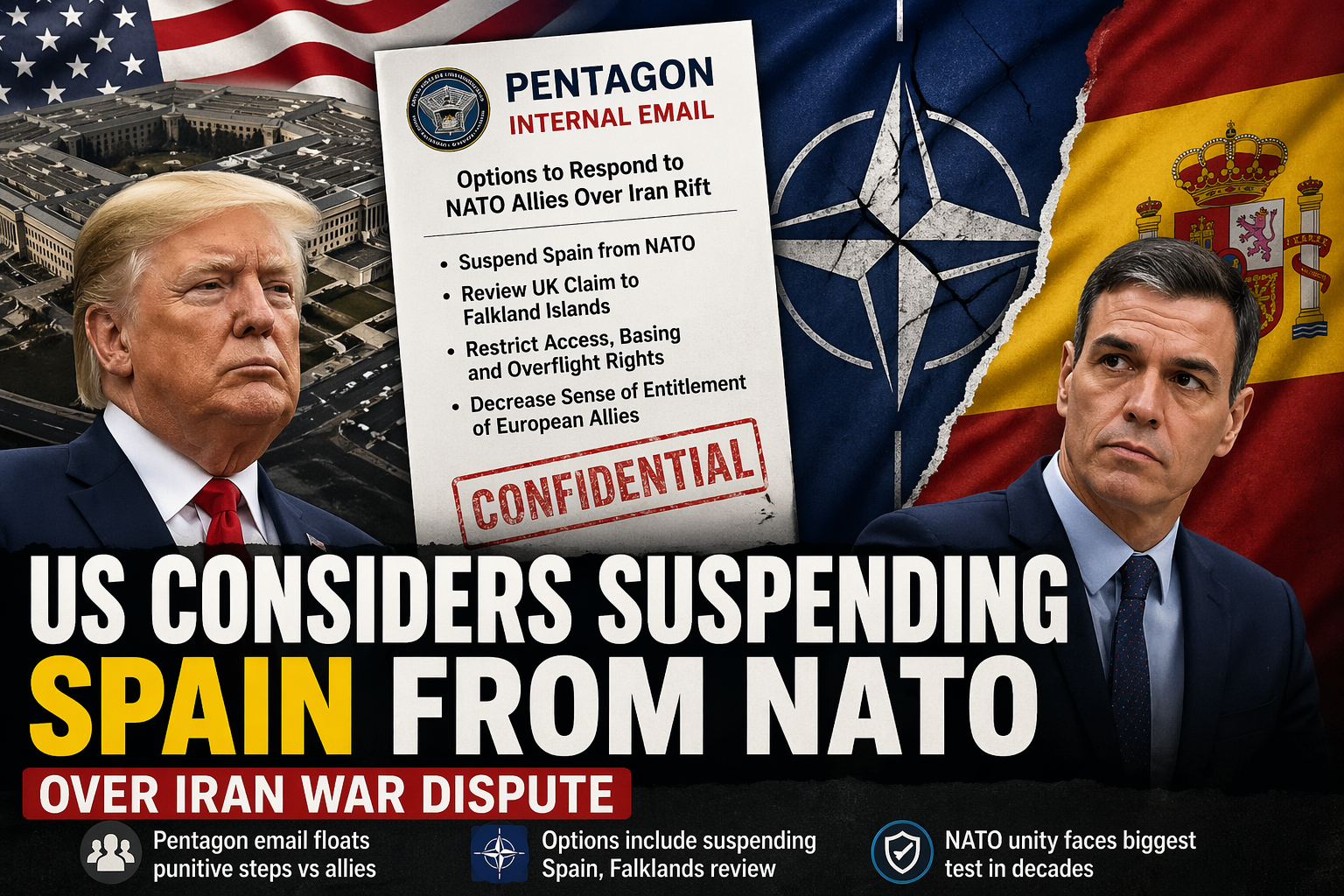
Tensions within the NATO alliance have escalated sharply after an internal Pentagon communication revealed potential U.S. plans to penalize certain member countries over their lack of support during the ongoing conflict with Iran.
According to a report by Reuters, an internal email circulating at senior levels within the U.S. Department of Defense outlines a range of policy options aimed at holding allies accountable. Among the most striking proposals is the possibility of suspending Spain from NATO and reconsidering U.S. support for Britain’s claim over the Falkland Islands.
Frustration Over Lack of Support
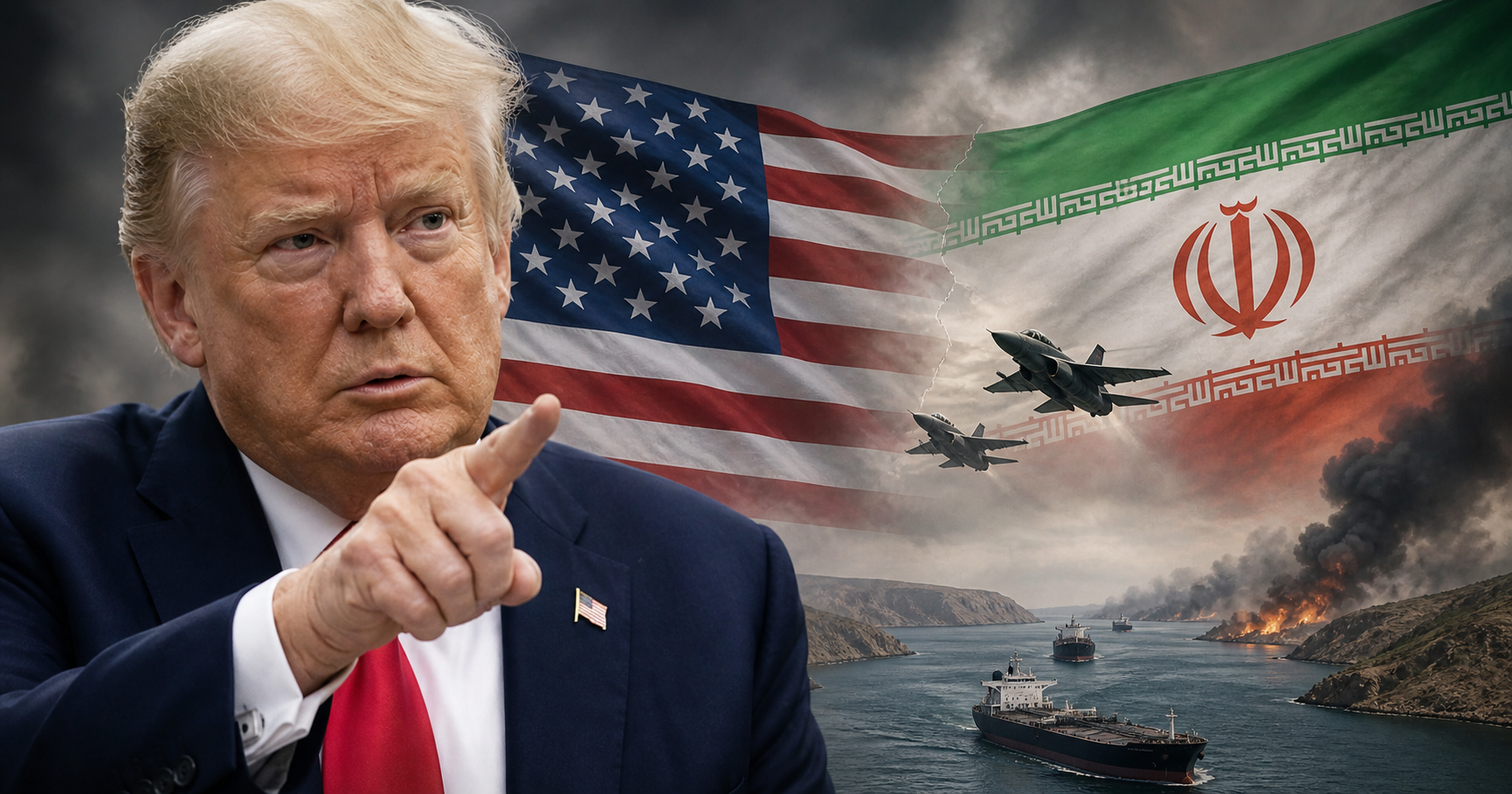
The proposals stem from growing dissatisfaction within the administration of Donald Trump, which has criticized several NATO members for failing to assist in U.S. military operations against Iran.
At the heart of the dispute is the refusal by some European allies to grant “access, basing, and overflight” (ABO) rights—considered a fundamental expectation within NATO cooperation. U.S. officials described this support as the “absolute baseline” for alliance obligations.
President Trump has repeatedly voiced frustration, especially over the lack of naval assistance in securing the Strait of Hormuz after it was shut down during the conflict. His remarks have further fueled uncertainty about the future of U.S. commitment to NATO.
Spain in the Crosshairs
One of the most controversial options discussed involves targeting Spain, which has resisted increasing its defense spending to the U.S.-recommended 5% of GDP.
The Pentagon memo suggests that suspending Spain from key NATO roles could send a strong symbolic message, even if it has limited operational impact. However, NATO officials have clarified that the alliance’s founding treaty does not include any provision for suspending member states.
Spanish Prime Minister Pedro Sánchez dismissed the report, stating that Spain remains a “loyal partner” and emphasizing that policy decisions should be based on official government positions rather than internal communications.
Broader Strategic Implications
The memo also proposes reassessing U.S. diplomatic support for European territorial claims, including Britain’s control of the Falkland Islands, which remain disputed by Argentina.
This suggestion has raised alarms among analysts, who warn that such moves could significantly weaken transatlantic trust. Experts argue that even symbolic threats could damage NATO’s credibility and unity at a time of heightened global instability.
Defense analysts have pointed out that the Iran conflict has exposed deep fractures within the alliance, particularly regarding how far member states are willing to go in supporting U.S.-led military actions.
Growing Uncertainty Around NATO’s Future
The ongoing dispute has reignited questions about NATO’s long-term viability. While European allies like Britain and France have expressed willingness to support maritime security efforts after a ceasefire, they have been cautious about direct involvement in the conflict.
Meanwhile, U.S. officials argue that NATO must function as a two-way partnership rather than a one-sided security guarantee.
Defense Secretary Pete Hegseth подчеркed that the war has “laid bare” the challenges within the alliance, noting that while Iran’s missiles may not reach the United States, they pose a direct threat to Europe.
A Fragile Alliance at a Crossroads
As geopolitical tensions intensify, NATO finds itself at a critical juncture. The U.S. push for greater accountability among allies may redefine the alliance’s structure, but it also risks deepening divisions.
Whether these proposals remain internal discussions or evolve into official policy could determine the future of one of the world’s most important military alliances.