



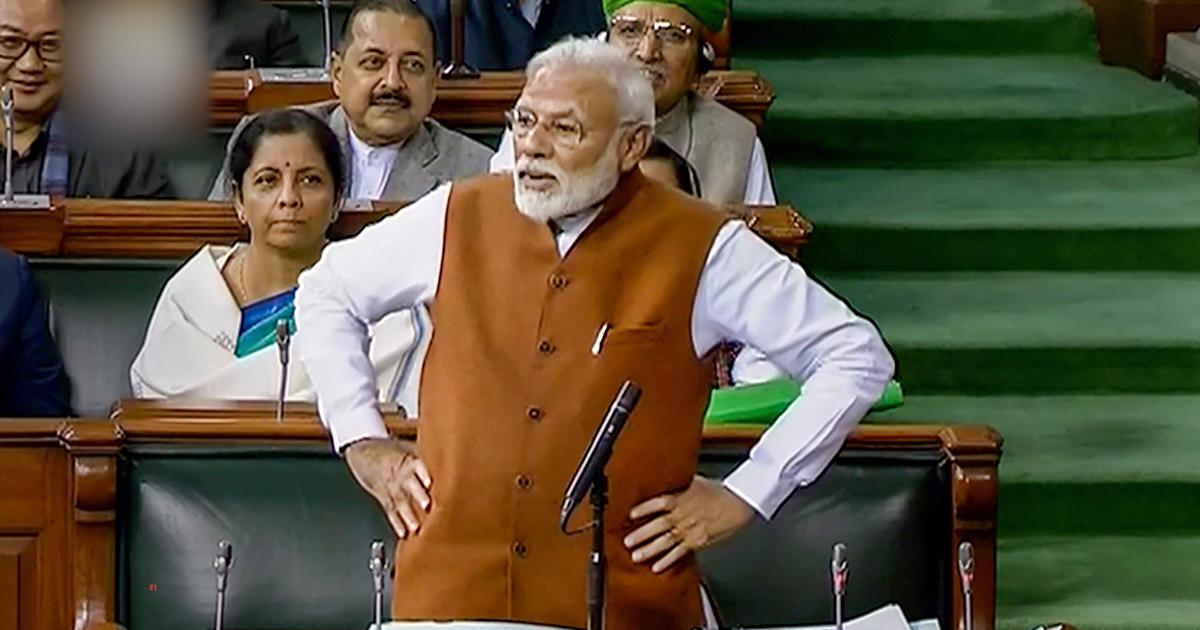
The government’s decision to table the Delimitation Bill in Parliament on Thursday has ignited a major political controversy, with opposition parties and several southern leaders warning that the move could deepen regional inequalities and weaken federal balance.
Instead of being seen as a routine constitutional exercise, the proposal has raised serious concerns about fairness, representation, and the long-term impact on India’s political structure.
Unequal Gains Raise Serious Questions
Under the proposed framework, states and union territories with only one Lok Sabha seat will see no increase in parliamentary representation, even as their legislative assemblies expand. This includes smaller northeastern states like Sikkim, Nagaland and Mizoram, along with several union territories.
At the same time, states with an odd number of seats are likely to gain disproportionately, as their representation will be rounded up. In most other states, the number of seats is expected to increase by 50%.
Critics argue that this uneven approach raises fundamental questions about equity. Rather than correcting imbalances, the proposal appears to create new ones, benefiting some regions while leaving others behind.
Southern States Fear Loss of Political Voice
The strongest opposition has come from southern states, where political leaders have openly expressed alarm over the potential consequences of delimitation.
Tamil Nadu Chief Minister M. K. Stalin and actor-politician Kamal Haasan have both warned that the exercise could significantly reduce the South’s influence in Parliament. The concern is rooted in population trends—states that successfully controlled population growth now risk being penalized with reduced representation.
Stalin’s controversial remark urging newlywed couples to consider early family planning highlights the depth of anxiety in the region. For many leaders, the issue goes beyond numbers—it is about losing political relevance at the national level.
A System That Rewards Population Growth?
At its core, delimitation is meant to ensure equal representation by redrawing constituencies based on population data. Articles 82 and 170 of the Constitution mandate periodic revisions after every census.
However, critics argue that the system unintentionally rewards states with higher population growth while disadvantaging those that implemented effective population control policies.
This imbalance was recognized decades ago, leading to a freeze on delimitation in 1976 through the 42nd Amendment. The freeze, later extended in 2001, was intended to maintain fairness and avoid incentivizing population growth for political gain.
With the freeze set to end, many fear that the original concerns are now resurfacing in a more serious form.
Numbers Reveal a Growing Divide
Projections for the upcoming delimitation exercise paint a troubling picture. The total number of Lok Sabha seats could increase from 543 to 753, but the distribution of those seats is expected to shift significantly.
Southern states, which currently hold 129 seats, may see a slight increase to 144. However, their overall share is projected to fall sharply from 23.7% to 19%.
In contrast, northern states could see a dramatic rise. Their representation may jump from 222 seats to as many as 357, consolidating political power in regions with higher population growth.
This shift has intensified fears that India’s political balance could tilt heavily toward the Hindi-speaking belt, marginalizing other regions.
Economic Contribution vs Political Power
Another major criticism revolves around the disconnect between economic contribution and political representation.
Southern and western states such as Tamil Nadu, Karnataka, and Maharashtra are among the largest contributors to the national economy. Yet, they receive a disproportionately smaller share of resources compared to states like Uttar Pradesh and Bihar.
Critics argue that the delimitation exercise ignores this imbalance. By focusing solely on population, it overlooks the economic realities that sustain the country’s growth.
This has led to growing calls for a more balanced formula that considers both population and economic contribution.
More Complexity with Reservations
The situation is further complicated by the intersection of delimitation with reservation policies. The planned implementation of 33% reservation for women in Parliament and state assemblies will coincide with the redrawing of constituencies.
Additionally, changes in Scheduled Caste (SC) and Scheduled Tribe (ST) reserved seats are expected, adding another layer of complexity to an already contentious process.
Experts warn that combining multiple structural changes at once could create confusion, administrative challenges, and further political friction.
A Risky Political Gamble
What was intended as a technical exercise now appears to be turning into a high-stakes political gamble. The government’s attempt to expand parliamentary seats while maintaining existing proportions has done little to ease concerns.
Instead, it has fueled suspicion that the changes may disproportionately benefit certain regions, potentially altering the balance of power in Indian politics for decades to come.
Conclusion
The Delimitation Bill has exposed deep fault lines in India’s federal structure. For many in the southern states, the issue is not just about numbers—it is about fairness, representation, and respect for states that have contributed significantly to the nation’s development.
Unless these concerns are addressed, the delimitation exercise risks becoming a source of long-term political division, undermining the very unity it is meant to strengthen.