




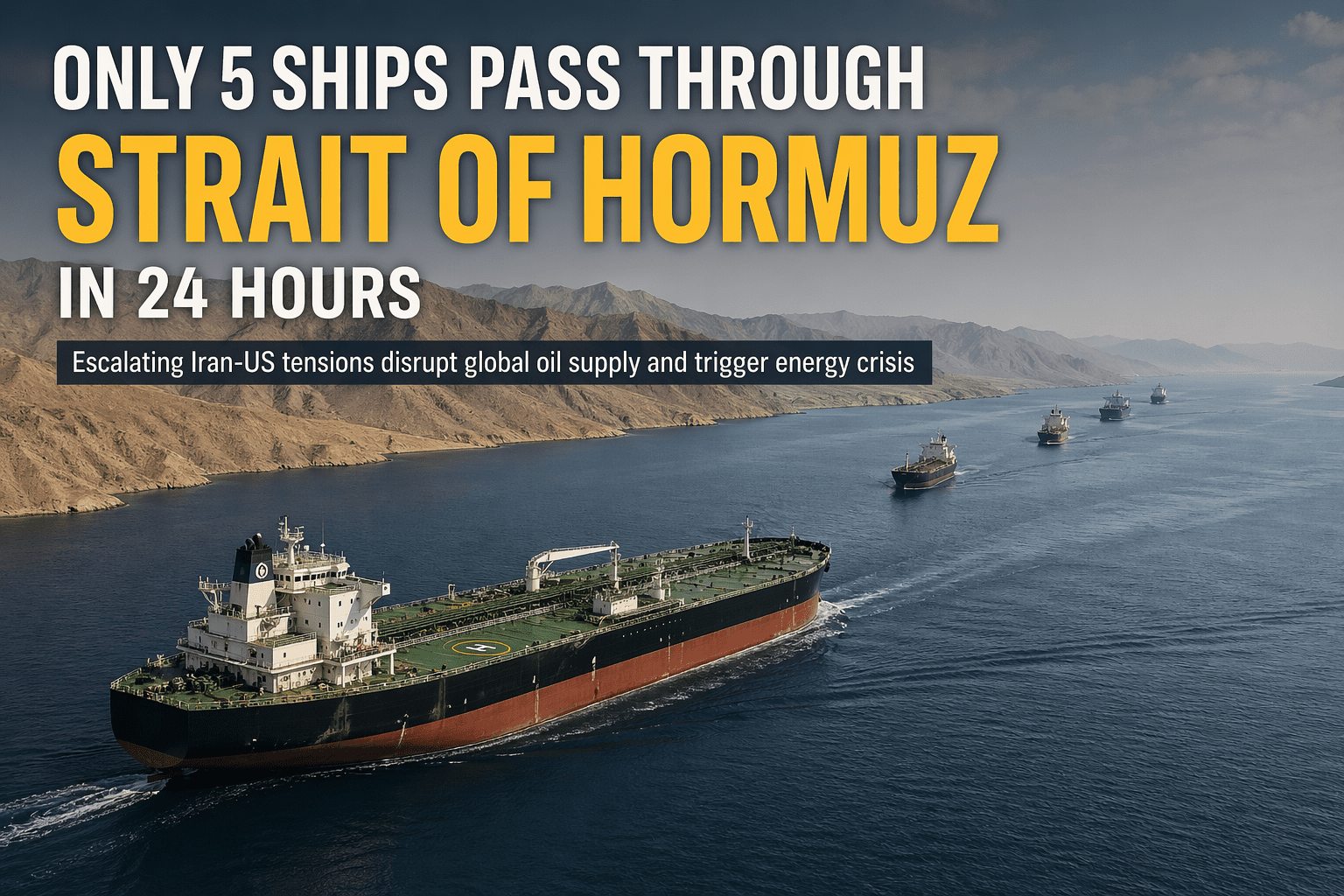
Global shipping through the critical Strait of Hormuz has slowed to an alarming crawl, with only five vessels transiting the passage in the last 24 hours, according to shipping data released Friday. The dramatic drop underscores escalating tensions between the United States and Iran, severely disrupting one of the world’s most vital energy corridors.
Traffic Collapse in a Critical Oil Artery
Before the outbreak of conflict on February 28, an average of around 140 ships per day passed through the narrow strait, which connects the Persian Gulf to global markets. The current figure represents a near-total collapse in maritime movement, raising concerns across the global energy and shipping industries.
The few ships that managed to pass included an Iranian oil products tanker operating under U.S. sanctions. Analysts tracking vessel movements reported that its destination remained unclear, adding to uncertainty over how vessels are navigating the increasingly dangerous waters.
Shipping Industry on Edge
Shipping companies are exercising extreme caution as the risk of confrontation remains high. Jakob Larsen, a senior official at the global shipping association BIMCO, stated that most operators are unwilling to resume normal operations without clear security guarantees and a stable ceasefire.
Instead, vessels are being forced to take narrow alternative routes along the coasts of Iran and Oman—channels that lack the capacity to handle typical traffic volumes and pose additional navigational risks.
Seizures and Military Presence Escalate Fears
Tensions intensified earlier this week after Iranian forces used fast attack boats to seize two container ships near the strait. The move has heightened fears among shipowners and insurers, many of whom now consider even an “open” Hormuz to be unsafe.
Meanwhile, the United States has continued its naval blockade of Iranian ports, creating a volatile standoff in the region. The situation remains fragile, with no visible progress toward renewed diplomatic talks.
Energy Crisis Deepens
The disruption has already begun to ripple across global markets. The Strait of Hormuz is responsible for transporting nearly 20% of the world’s oil and liquefied natural gas (LNG). With flows restricted, supply chains are tightening, triggering fears of a prolonged global energy crisis.
Adding to the crisis, hundreds of ships and over 20,000 seafarers remain stranded inside the Gulf, awaiting safer conditions. War-risk insurance premiums have surged, further discouraging transit through the region.
Limited Movement Continues
Despite the risks, a handful of vessels are still attempting passage. One ship from German container shipping giant Hapag-Lloyd AG reportedly crossed the strait, though details remain scarce.
Additionally, the Comoros-flagged supertanker Helga successfully reached an offshore oil terminal near Basra, Iraq, becoming only the second vessel to arrive since the effective closure of the strait.
Outlook Remains Uncertain
Nearly two months into the conflict, prospects for de-escalation appear bleak. With military activity ongoing and trust between the involved parties deteriorating, the future of safe passage through the Strait of Hormuz remains uncertain.
For now, the world watches closely as one of its most crucial maritime lifelines hangs in the balance.