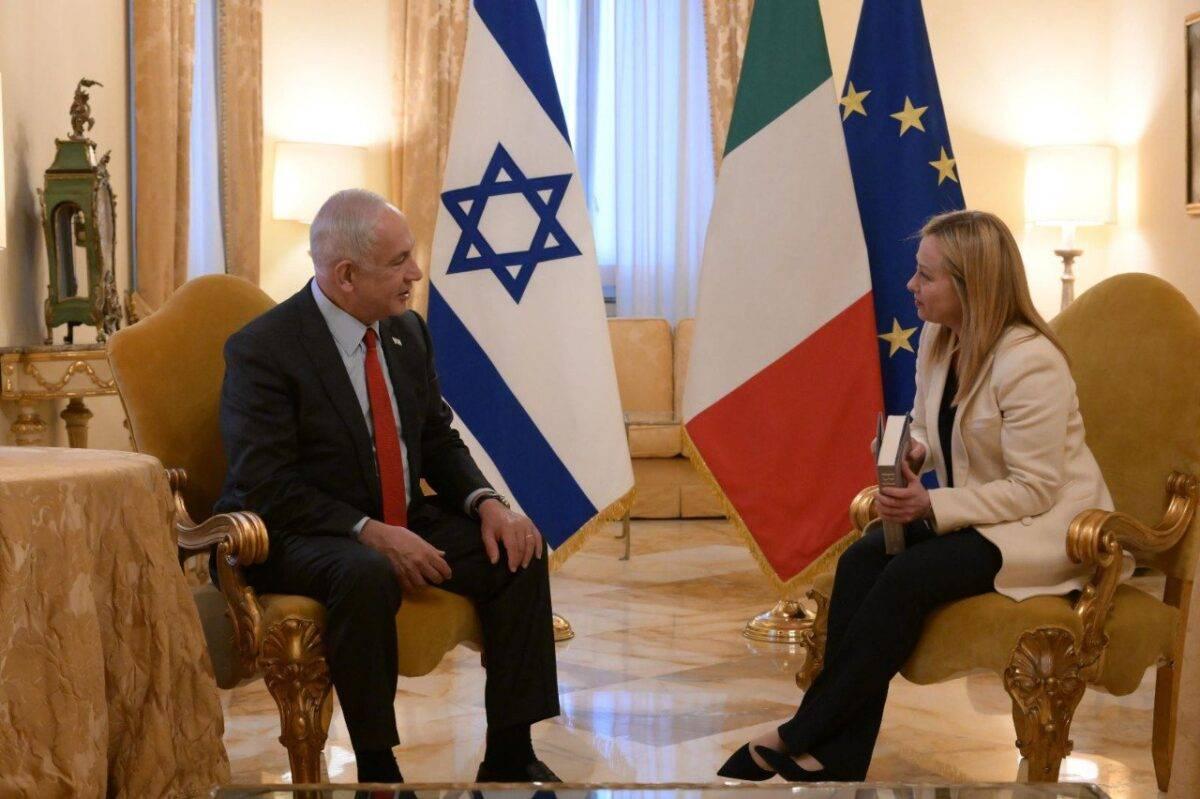
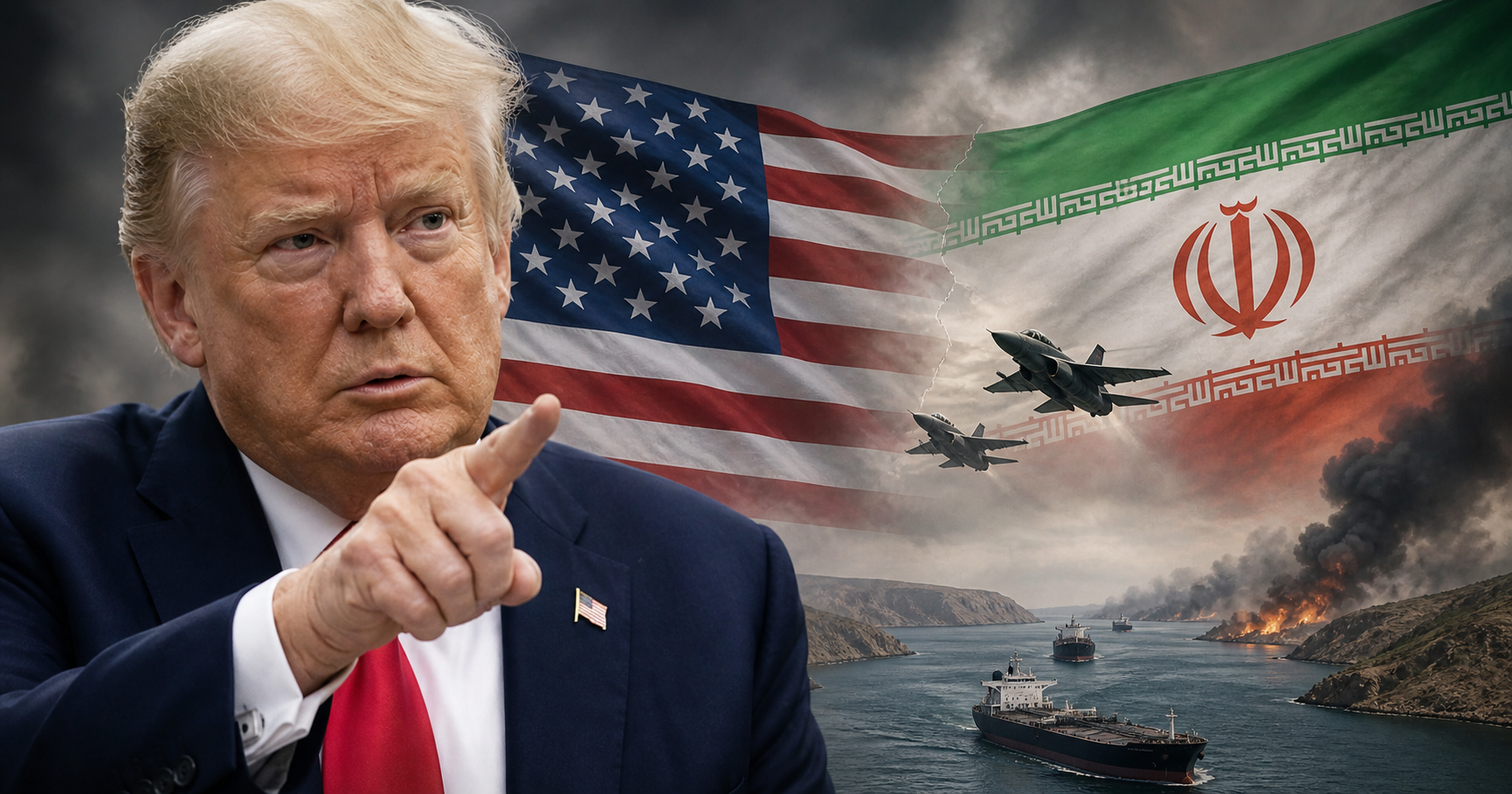

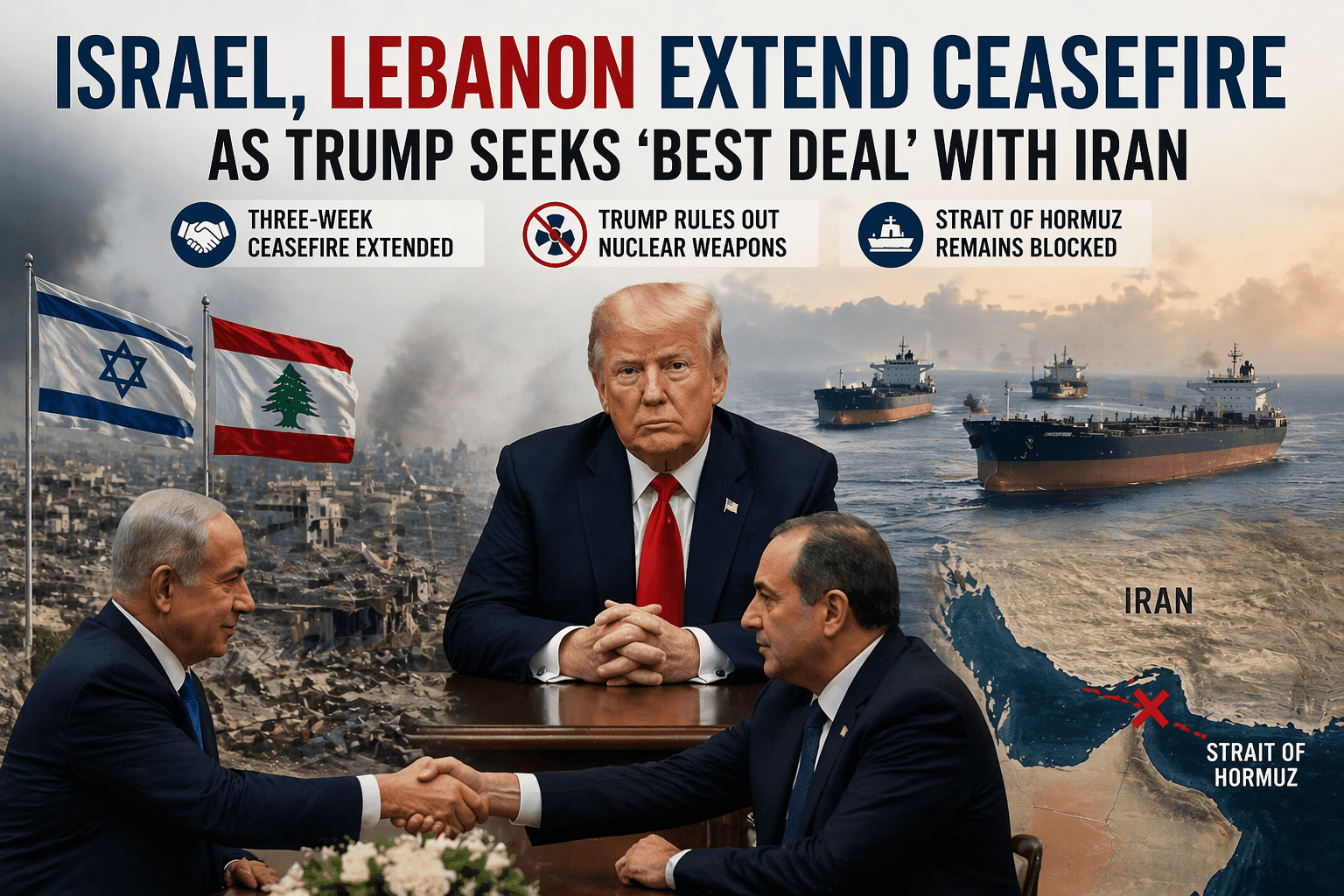
In a significant diplomatic development, Israel and Lebanon have agreed to extend their ongoing ceasefire by three weeks following high-level talks at the White House. The agreement, brokered by U.S. President Donald Trump, comes amid broader efforts to de-escalate a rapidly intensifying regional conflict involving Iran.
The extension is seen as a temporary but crucial step toward stabilizing tensions between Israel and Iranian-backed Hezbollah forces in Lebanon—one of several flashpoints in the ongoing eight-week conflict across the Middle East.
Ceasefire Amid Wider Regional Crisis
Fighting between Israel and Hezbollah has been a major obstacle to resolving the broader conflict, which also includes disputes over Iran’s nuclear ambitions and control of the vital Strait of Hormuz.
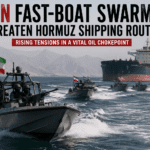
Despite the ceasefire extension, the situation remains fragile. The Strait of Hormuz—through which roughly 20% of the world’s oil supply passes—continues to face severe disruptions. Shipping routes are effectively blocked, placing immense pressure on global energy markets and raising concerns of a prolonged economic impact.
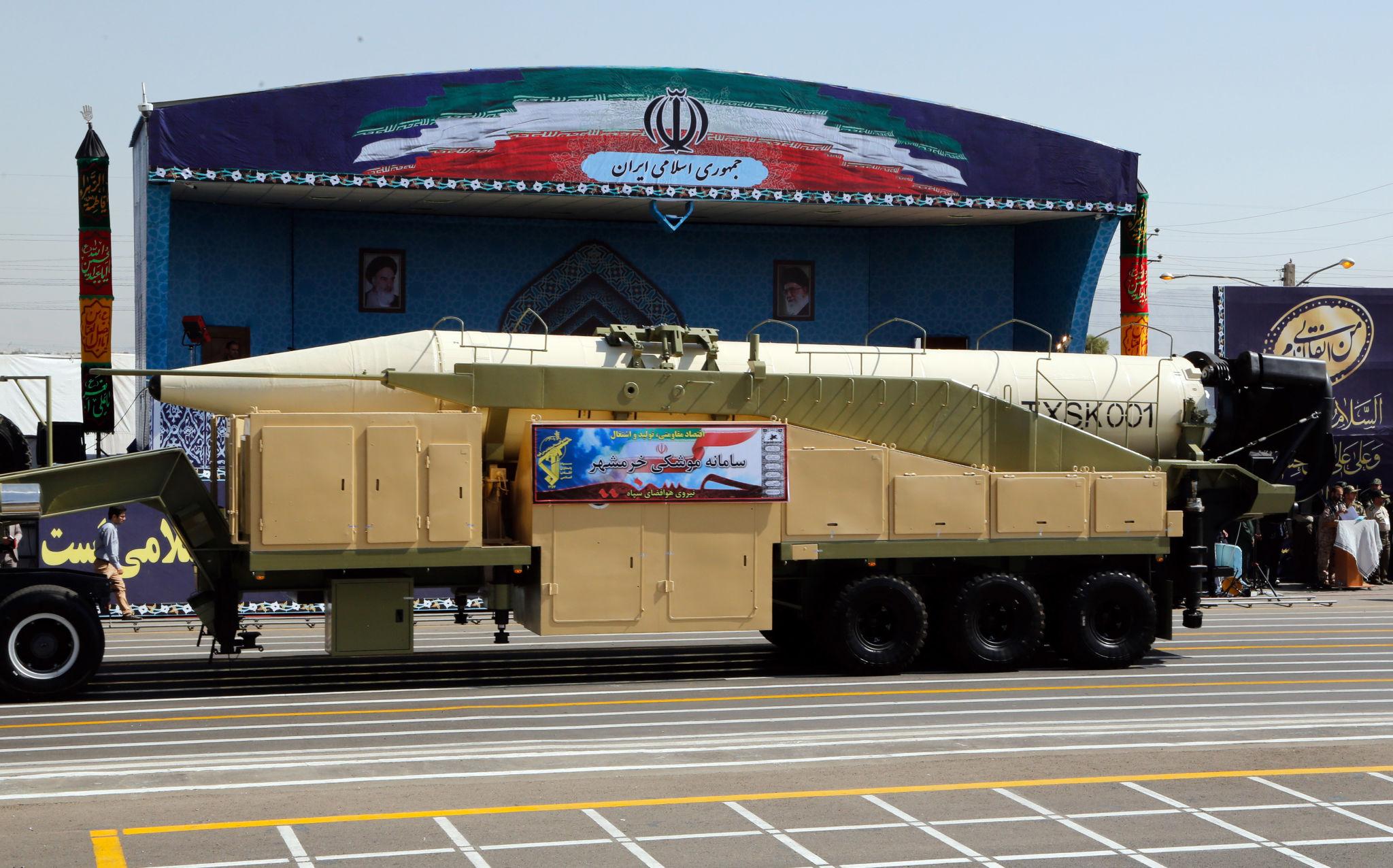
Recent incidents, including Iran’s seizure of two large cargo vessels, underscore the ongoing instability and highlight the limitations of U.S. efforts to maintain control in the region.
Trump Signals Patience, Rejects Nuclear Option
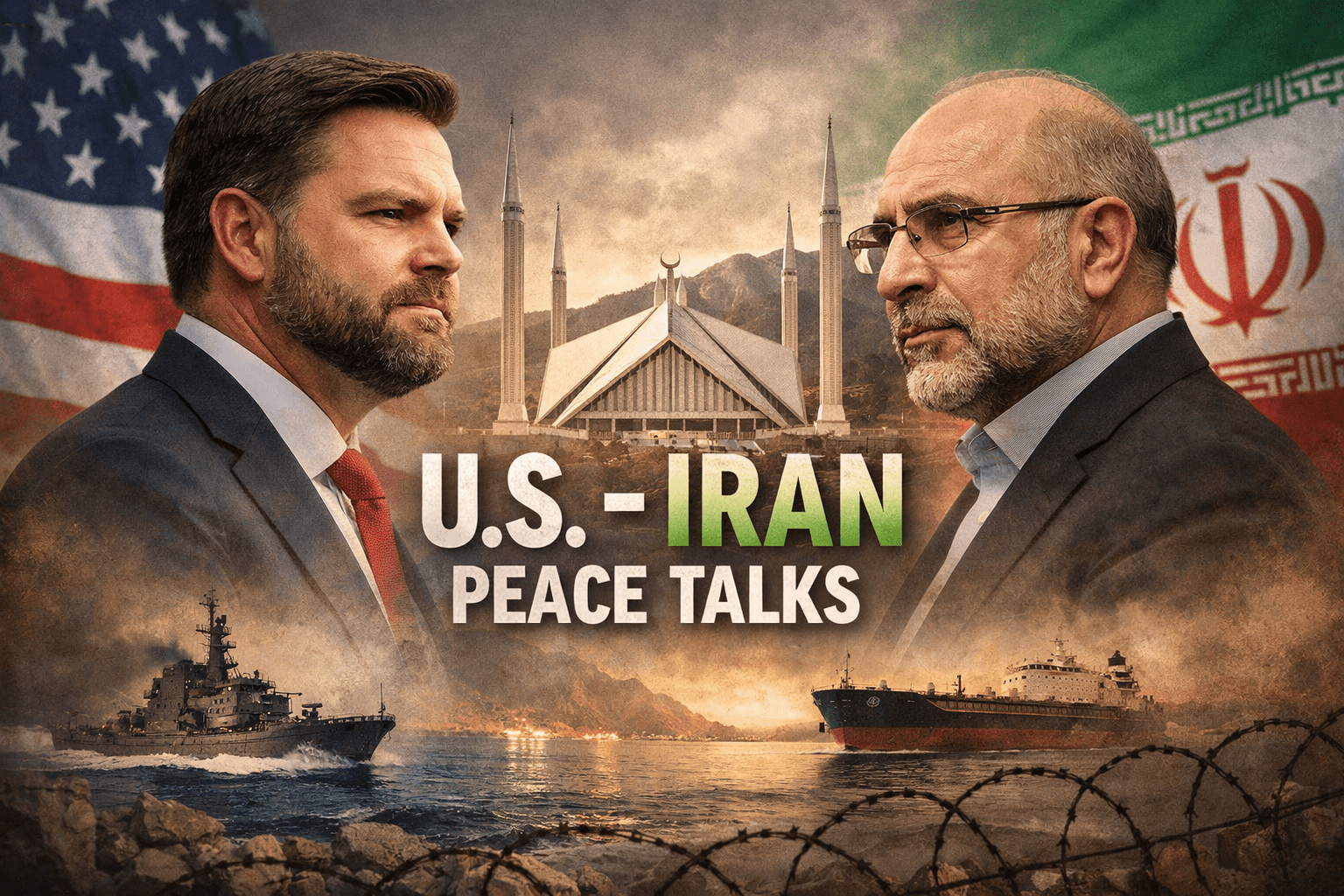
Speaking after the meeting, Trump emphasized that he is in no hurry to finalize a peace agreement with Iran, stating his goal is to secure a long-term, “everlasting” deal.
“Don’t rush me. I want to make the best deal,” he said.
The U.S. president reiterated that Washington holds a strong strategic position in the naval standoff but acknowledged ongoing challenges, particularly Iran’s use of small, fast-attack boats in the Gulf.
Trump also made it clear that nuclear weapons would not be part of the U.S. strategy:
“A nuclear weapon should never be allowed to be used by anybody.”
Instead, he claimed that Iran’s military capabilities had already been significantly weakened through conventional means.
Iran Pushes Back Against U.S. Claims
Iranian leadership strongly rejected U.S. assertions of internal instability. Mojtaba Khamenei dismissed claims that Iran’s leadership was in disarray, calling them “enemy propaganda.”
In a statement, he emphasized national unity and resilience, asserting that external pressure would only strengthen Iran internally.
Khamenei has largely remained out of the public spotlight since assuming leadership after the death of his predecessor, Ali Khamenei, who was reportedly killed in U.S. strikes earlier in the conflict.
Continued Tensions in the Gulf
While diplomatic efforts continue, tensions remain high in the Persian Gulf. The U.S. Navy has reportedly been instructed to take aggressive action against Iranian vessels suspected of laying mines in the Strait of Hormuz.
At the same time, Iran’s continued ability to disrupt shipping—even amid a ceasefire—demonstrates its strategic leverage in the region.
Analysts warn that unless a broader agreement is reached, the situation could quickly escalate again, with serious consequences for global trade, energy security, and geopolitical stability.
A Fragile Path Forward
The three-week ceasefire extension offers a narrow window for diplomacy, but major challenges remain unresolved. Key issues—including Iran’s nuclear program, regional proxy conflicts, and maritime security—continue to complicate negotiations.
As the U.S. pushes for what Trump calls the “best deal,” the world watches closely, aware that the stakes extend far beyond the Middle East.