







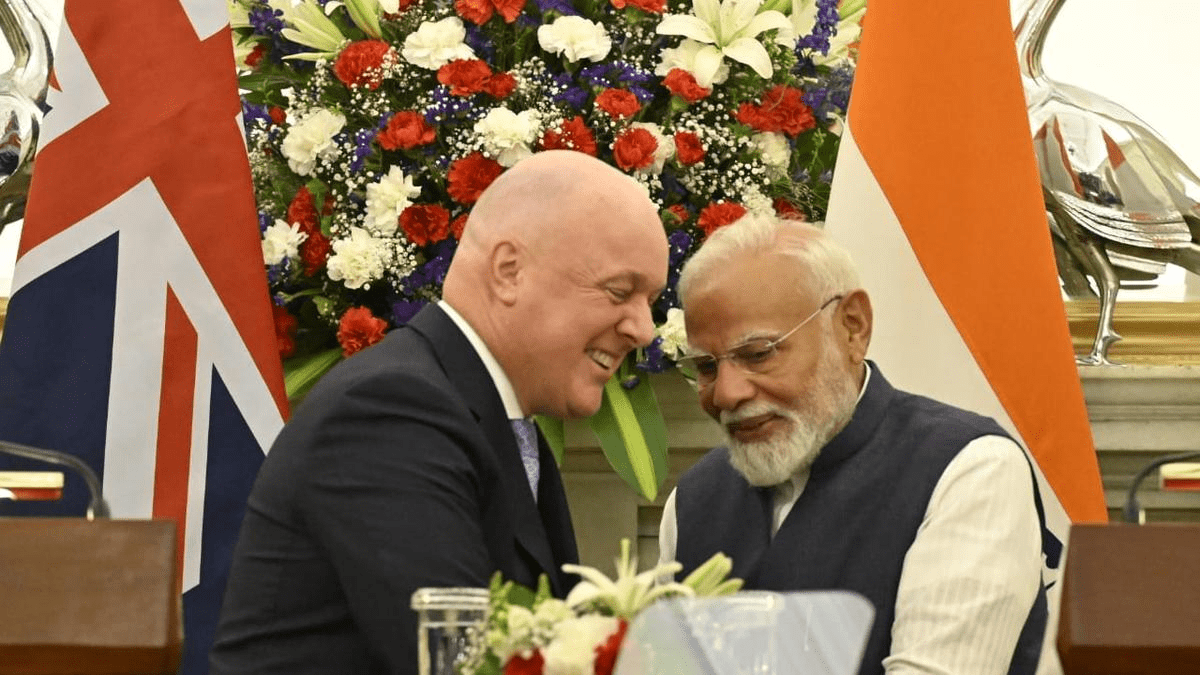
India is set to take a major step forward in global trade diplomacy as it prepares to sign a Free Trade Agreement (FTA) with New Zealand on April 27 in New Delhi. The deal, expected to be signed at Bharat Mandapam after the India–New Zealand Business Forum, is being seen as a strategic and economic milestone for both nations.
The agreement aims to boost trade, increase investment, and strengthen economic ties, marking one of India’s most comprehensive bilateral trade deals in recent years.
What the FTA Means
At its core, the India–New Zealand FTA is designed to open markets and reduce trade barriers between the two countries.
Key Highlights:
- Zero-duty access for 100% of Indian exports to New Zealand
- Tariff reduction/removal on 95% of New Zealand exports to India
- Target to double bilateral trade to $5 billion within 5 years
- Expected $20 billion investment inflow over 15 years
This deal gives Indian exporters a significant advantage by allowing them to enter New Zealand’s market without tariffs, making their goods more competitive.
Big Opportunities for Indian Exporters

The agreement is particularly beneficial for Indian industries that rely heavily on exports.
Sectors expected to gain include:
- Textiles and garments
- Pharmaceuticals
- Engineering goods
- IT and services
- Agricultural processed goods
With tariff-free access, Indian businesses can expand into a developed market like New Zealand more easily, increasing both revenue and global presence.
What New Zealand Gains

New Zealand will also benefit significantly from the agreement.
The country will receive reduced or zero tariffs on exports such as:
- Wool and forestry products
- Coal and wood
- Wine and agricultural produce (like avocados and blueberries)
- Sheep meat and related products
However, India has taken a protective stance on sensitive sectors.
India Protects Its Farmers

Despite opening up trade, India has carefully excluded key agricultural products from tariff concessions to safeguard domestic industries.
Excluded Items:
- Dairy products (milk, cheese, yoghurt, whey)
- Onions and sugar
- Spices and edible oils
- Rubber
This ensures that Indian farmers and small producers are not negatively impacted by cheaper imports.
Boost for Jobs and Mobility

One of the most important aspects of the FTA is in the services sector.
New Zealand has agreed to:
- Provide 5,000 annual work visas for Indian professionals
- Allow stays of up to three years
- Focus on skilled occupations
This opens new opportunities for Indian talent, especially in IT, engineering, and professional services.
Current Trade and Future Potential
Trade between India and New Zealand has remained relatively modest so far:
- $1.3 billion in merchandise trade (2024–25)
- $2.4 billion total trade, including services
- Services alone contributed $1.24 billion, led by IT and travel
The FTA aims to significantly scale this relationship, positioning both countries as stronger economic partners in the Indo-Pacific region.
Strategic Importance
Beyond economics, the agreement has geopolitical significance.
- Strengthens India’s presence in the Indo-Pacific
- Diversifies trade partnerships beyond traditional markets
- Reduces dependency on specific regions
- Enhances cooperation with developed economies
For New Zealand, it provides deeper access to one of the world’s fastest-growing major economies.
Final Take
The India–New Zealand Free Trade Agreement is more than just a trade deal—it’s a long-term strategic partnership.
With tariff-free access, investment potential, and job opportunities, the agreement is expected to unlock new growth avenues for both nations. At the same time, India’s cautious approach in protecting sensitive sectors ensures a balanced and sustainable outcome.
If implemented effectively, this FTA could become a blueprint for future trade agreements, helping India strengthen its global economic footprint while supporting domestic industries.