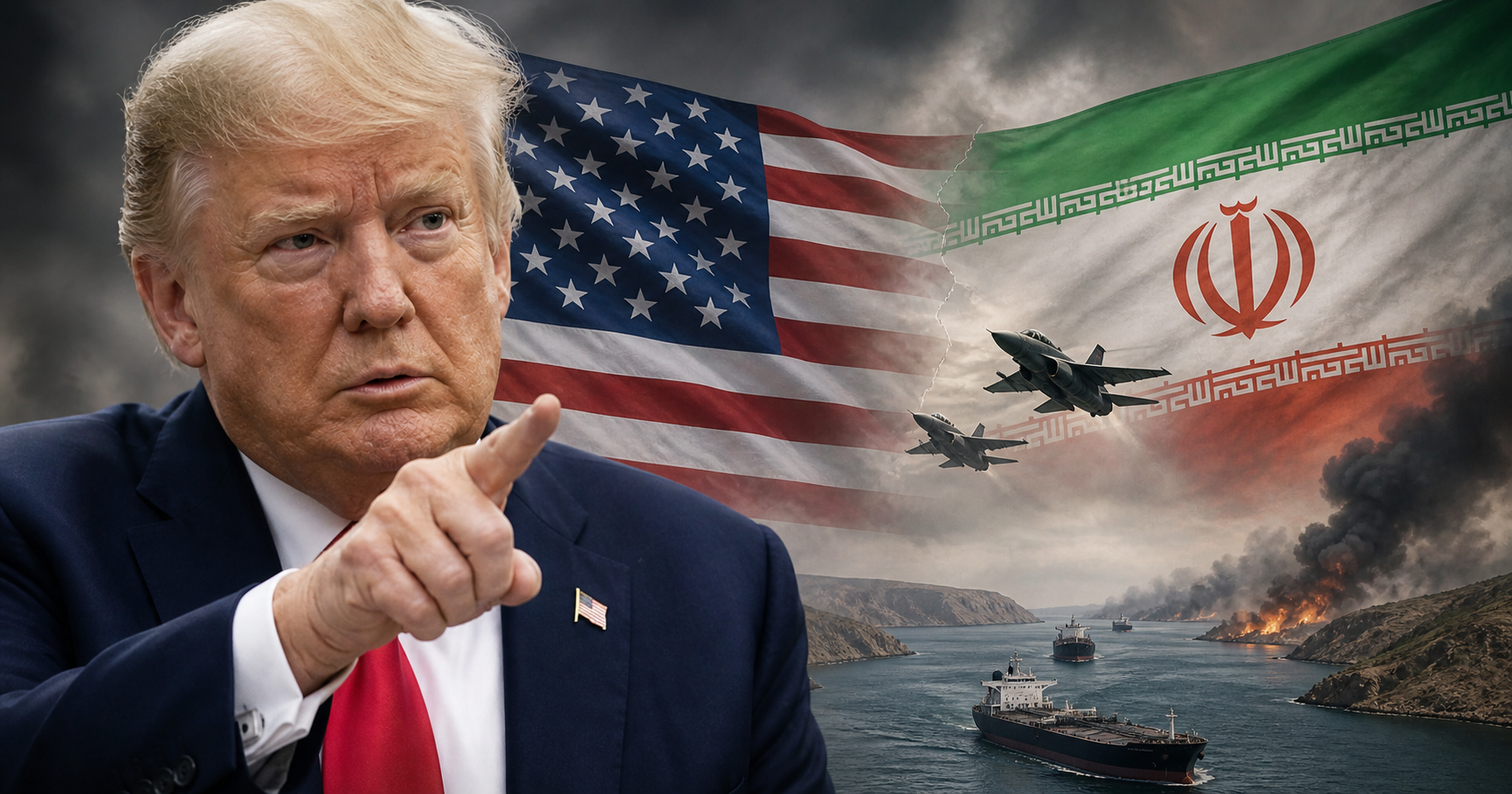

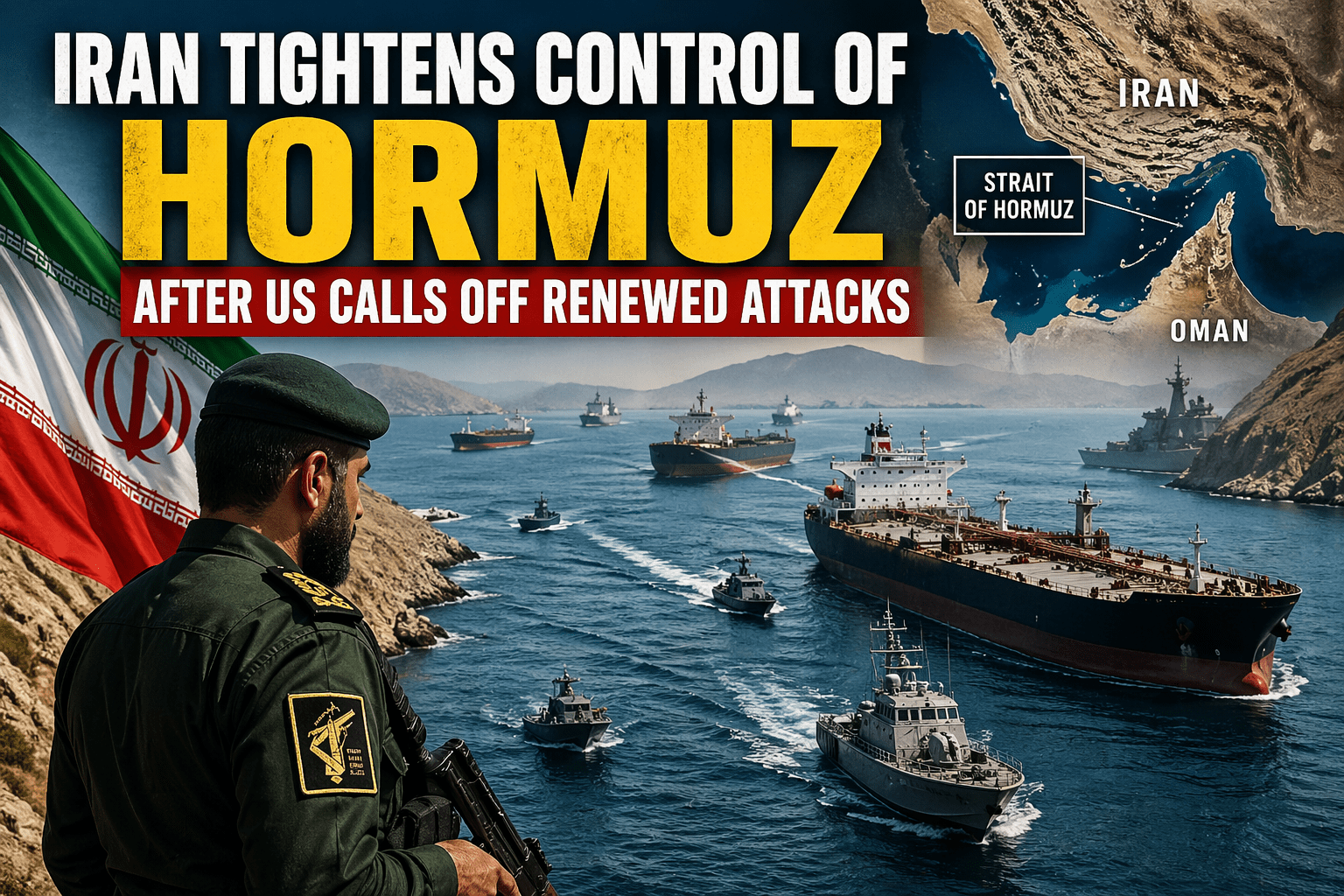
Tensions in the Middle East remain high as Iran tightened its control over the strategically vital Strait of Hormuz following the United States‘ decision to halt renewed military strikes.
The move comes amid uncertainty over a fragile ceasefire that appears increasingly unstable, with both sides taking conflicting positions.
Iran Seizes Ships Amid Strategic Power Play
Iran’s Islamic Revolutionary Guard Corps (IRGC) seized two foreign vessels in the Strait of Hormuz, accusing them of operating without proper permits and manipulating navigation systems.
The seized ships include:
- Liberia-flagged Epaminondas
- Panama-flagged MSC Francesca
Additionally, a third vessel was reportedly fired upon but escaped damage and resumed its journey.
Iran’s actions signal a clear attempt to assert dominance over one of the world’s most critical maritime trade routes, through which nearly 20% of global oil supply passes.
US Calls Off Attacks but Maintains Blockade
Donald Trump announced an indefinite pause on further military strikes against Iran, stepping back from earlier threats targeting critical infrastructure.
However, the US has not lifted its naval blockade, which Iran considers an act of war.
The US military has:
- Redirected over 30 vessels away from Iranian waters
- Intercepted Iranian tankers near India, Malaysia, and Sri Lanka
This dual strategy—halting attacks while maintaining economic pressure—has created a diplomatic deadlock.
Iran’s Response: No Ceasefire Without Blockade Lift
Iranian Parliament Speaker Mohammad Baqer Qalibaf made it clear that a full ceasefire is conditional.
He stated that reopening the Strait of Hormuz is “impossible” while the US blockade remains in place, calling it a violation of ceasefire terms.
His remarks underline Iran’s stance:
➡️ No economic relief = No peace agreement
Global Impact: Oil Trade and Economic Pressure
The continued disruption in the Strait of Hormuz is already impacting global markets:
- Oil shipments face delays and rerouting
- Shipping insurance costs are rising
- Energy-importing countries face supply uncertainty
The chokepoint connects the Persian Gulf to global markets, making any instability a global economic concern, not just a regional issue.
Peace Talks Stall Despite Mediation Efforts
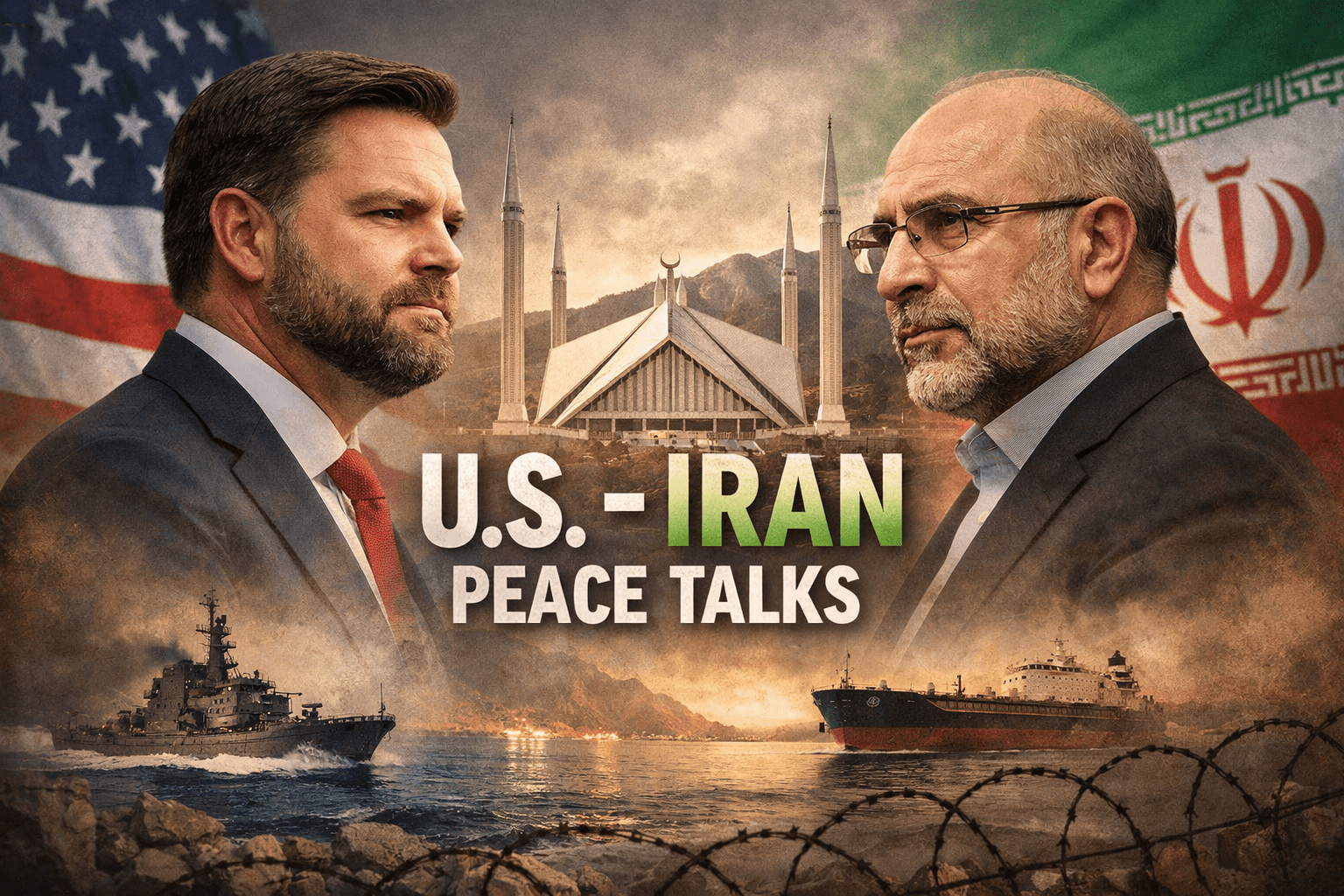
Efforts to revive negotiations have so far failed, despite mediation attempts by Pakistan.
There is currently:
- No confirmed ceasefire extension
- No timeline for renewed talks
- No agreement on lifting the blockade
This leaves both nations in a tense standoff, with neither escalation nor resolution in sight.
Conclusion
The situation remains in a fragile equilibrium. While the US has paused direct military action, its continued blockade and Iran’s aggressive control of the Strait of Hormuz keep tensions alive.
With global trade at stake and diplomacy stalled, the coming days will be critical in determining whether the region moves toward de-escalation—or slips back into conflict.