




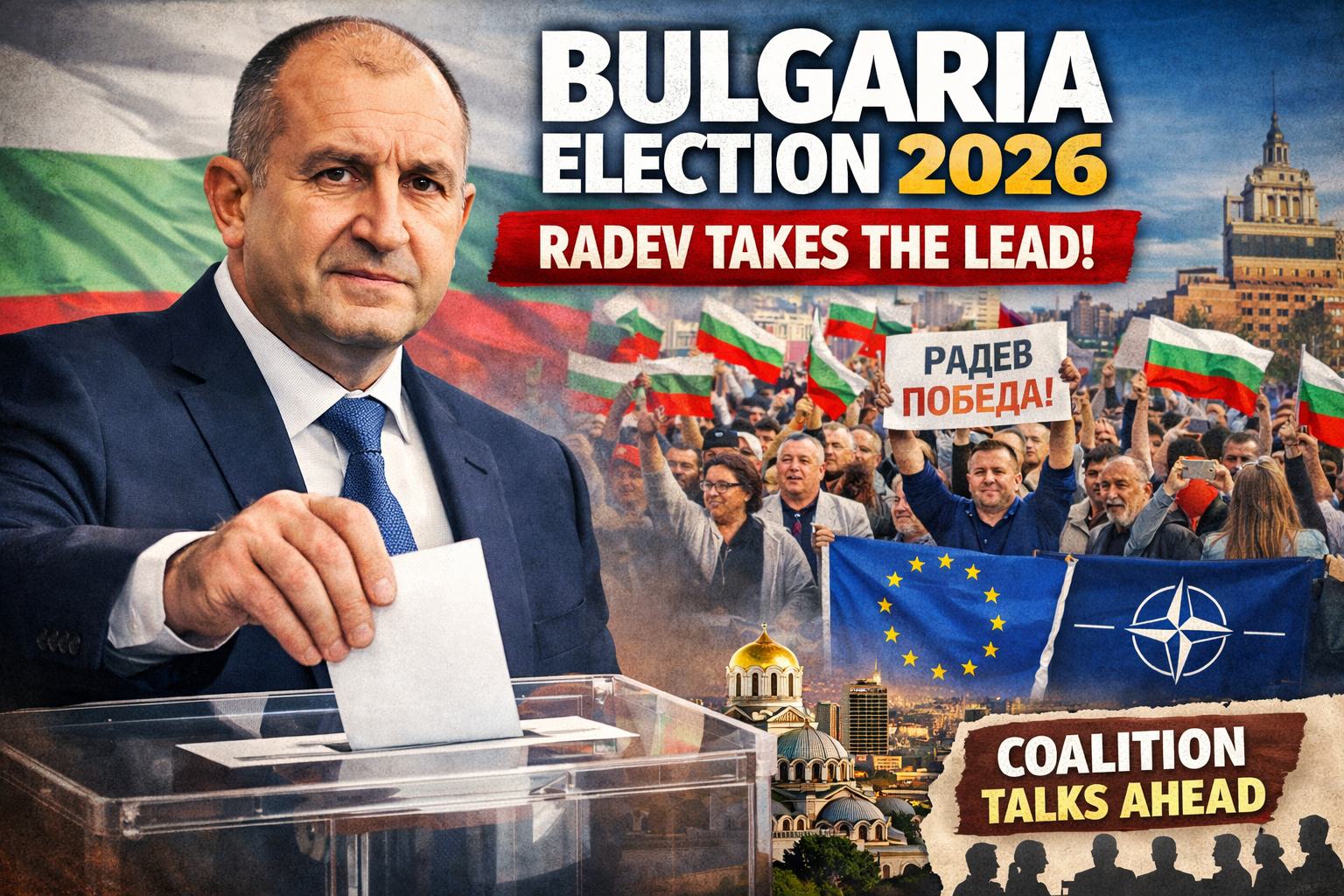
Bulgaria appears poised for another major political shift as former president Rumen Radev and his party Progressive Bulgaria take a commanding lead in the country’s latest parliamentary election, according to exit polls released on Sunday.
The Sofia-based Alpha Research exit poll projects Radev’s party at 38.1% of the vote, significantly ahead of competitors. The GERB party, led by former Prime Minister Boyko Borissov, trails far behind with 15.9%, while the reformist alliance We Continue the Change–Democratic Bulgaria (PP-DB) stands at 14.1%.
If confirmed, the result would mark one of the most decisive electoral victories in Bulgaria in recent years—yet not enough for a single-party majority.
A Vote Driven by Frustration and Fatigue
This election, the eighth in just five years, reflects deep political instability in Bulgaria. Years of fragile coalitions, corruption allegations, and repeated government collapses have left voters frustrated and eager for stability.
The previous government fell in December following mass protests over economic policies, including proposed tax hikes and rising social security contributions. Since then, public anger has continued to grow, particularly over the increasing cost of living and persistent corruption.
Many voters see Radev as a figure capable of breaking this cycle. His campaign focused heavily on restoring stability, tackling corruption, and ending what many Bulgarians view as ineffective governance.
Pro-Russia Position Sparks Debate
A key element of Radev’s campaign has been his call to improve relations with Moscow and restore the flow of Russian oil and gas into Europe. He has also opposed military support for Ukraine, setting him apart from many European leaders.
However, Bulgaria remains a member of both the European Union and NATO, which could limit any drastic foreign policy changes. Analysts suggest that any coalition government—especially one involving pro-European parties like PP-DB—may temper Radev’s stance.
Coalition Arithmetic Will Decide the Future
Despite his strong lead, Radev will need coalition partners to form a functioning government. He has already indicated willingness to work with reformist groups on key issues such as judicial reform.
At the same time, he did not rule out forming a minority government, signaling flexibility in navigating Bulgaria’s fragmented political landscape.
“We will do everything possible to avoid going to elections again. It is ruinous for Bulgaria,” Radev said after exit polls were released, highlighting the urgency of forming a stable administration.
Economic Pressures and Governance Challenges Ahead
While Bulgaria has made significant progress since joining the European Union in 2007—including improved economic safeguards and low unemployment—it continues to lag behind many EU peers in income levels and institutional strength.
Corruption remains a persistent issue, with allegations of vote-buying and misuse of power still widespread. Meanwhile, the transition to the euro earlier this year has coincided with rising living costs, further fueling public dissatisfaction.
The next government will face the dual challenge of restoring public trust while addressing economic pressures that affect everyday citizens.
What Comes Next
Final election results are expected on Monday, after which coalition negotiations will begin. The outcome will not only determine Bulgaria’s domestic trajectory but could also influence its position within Europe at a time of heightened geopolitical tension.