




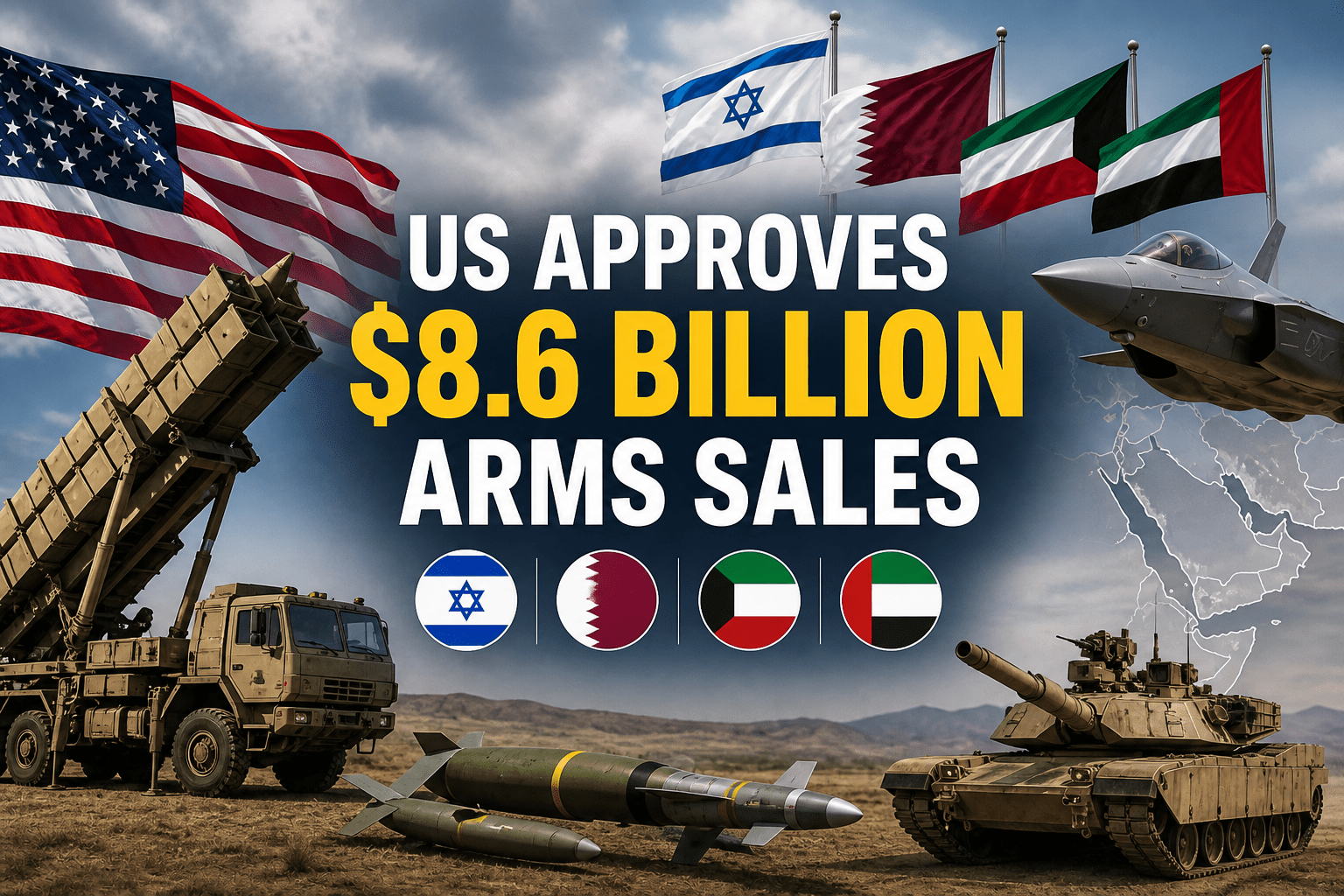
The United States has approved a sweeping set of arms sales worth more than $8.6 billion to key partners in the Middle East, reinforcing regional defense capabilities as tensions with Iran continue to shape security dynamics.
The package, cleared by the US State Department, includes military equipment and support for Israel, Qatar, Kuwait, and the United Arab Emirates. The approvals come weeks after a fragile ceasefire paused active hostilities in the recent US–Israel confrontation with Iran, though the broader conflict remains unresolved.
Breakdown of the Deals
The largest portion of the package is directed toward Qatar, which will receive Patriot air and missile defense system support and replenishment services valued at approximately $4.01 billion. In addition, Qatar is set to acquire Advanced Precision Kill Weapon Systems (APKWS), a laser-guided rocket kit designed to improve targeting accuracy, in a deal worth nearly $1 billion.
Kuwait’s share of the package focuses on strengthening battlefield coordination. The country has been approved to purchase an integrated battle command system valued at $2.5 billion, aimed at enhancing real-time military decision-making and coordination across defense networks.
Israel will receive APKWS systems worth close to $1 billion, while the United Arab Emirates is set to acquire the same system in a smaller deal valued at around $147.6 million.
Defense Industry Players
Several major defense contractors are involved in executing these deals. BAE Systems will lead the supply of APKWS kits across multiple countries. Meanwhile, RTX Corporation and Lockheed Martin are key players in Qatar’s missile defense support and Kuwait’s command system project. Northrop Grumman is also contributing to the Kuwaiti program.
Strain on US Stockpiles
The approvals come at a time when US military resources are under pressure. Ongoing support for allies involved in the Iran conflict has reportedly stretched American weapons stockpiles, prompting warnings to European partners about potential delays in arms deliveries.
Countries such as the United Kingdom, Poland, Lithuania, and Estonia have been advised to expect slower timelines for previously planned military supplies as Washington prioritizes urgent needs in the Middle East.
Strategic Context
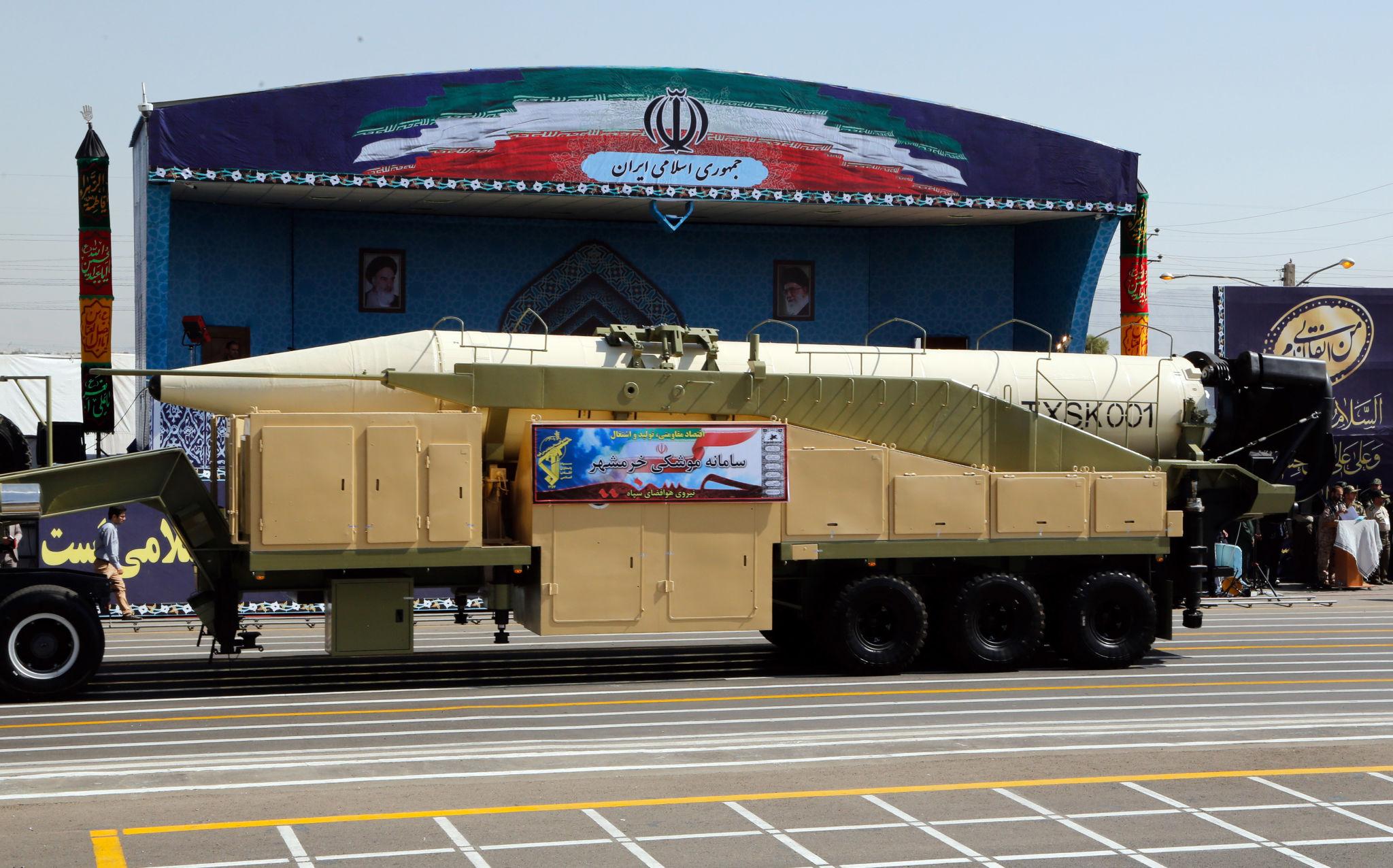
The latest arms package highlights Washington’s continued commitment to bolstering its allies in a volatile region. During the recent conflict, Israel and several Gulf nations faced repeated missile and drone attacks attributed to Iran, underscoring the need for enhanced air defense and precision strike capabilities.
Donald Trump, who has been closely involved in recent policy discussions, stated that additional military options regarding Iran remain under consideration. He also signaled dissatisfaction with recent ceasefire proposals, suggesting that long-term stability is far from guaranteed.
While the ceasefire has temporarily reduced direct clashes, core objectives—such as limiting Iran’s nuclear ambitions and curbing its missile capabilities—remain unresolved. As a result, the region continues to operate under heightened tension, with further developments likely in the weeks ahead.