


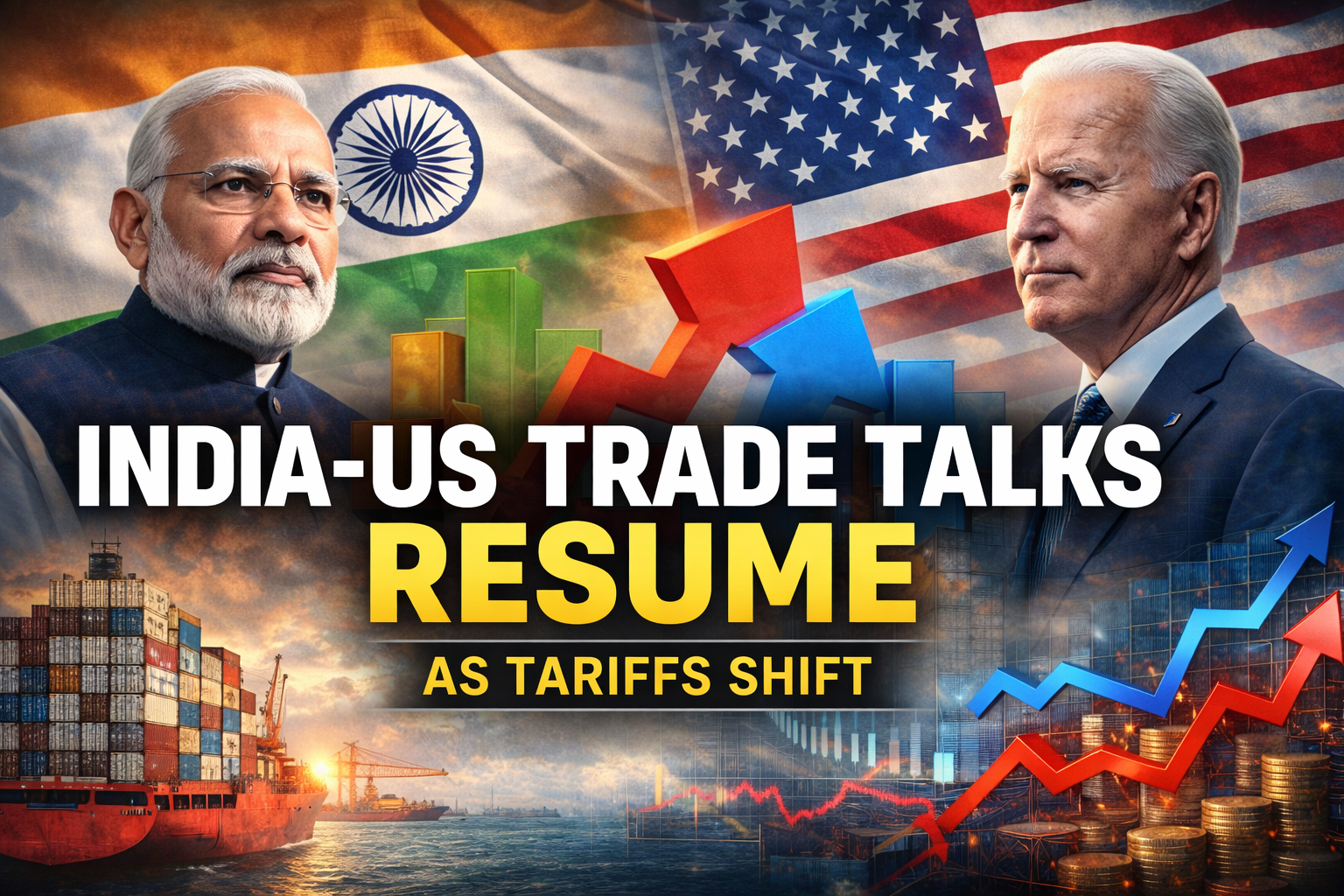
India and the United States are set to accelerate discussions on a proposed Bilateral Trade Agreement (BTA), with fresh negotiations scheduled from April 20 to 22 in the United States.
According to the commerce ministry, an Indian delegation will visit the U.S. to carry forward talks aimed at strengthening economic ties and resolving longstanding trade issues between the two nations.
Recent Developments in Trade Relations

Earlier this year, both countries announced an interim trade deal on February 2, signaling renewed commitment to economic cooperation.
Shortly after:
- The U.S. removed 25% additional tariffs on select goods (Feb 7)
- Reciprocal tariffs were paused from Feb 20, easing tensions
These steps boosted business confidence and improved the outlook for exporters involved in cross-border trade.
Tariff Challenges and Policy Shifts

Despite positive developments, the global trade environment remains uncertain. On February 24, the U.S. imposed a uniform 10% tariff on imports from all countries, reflecting a broader shift in its trade strategy.
Additionally, Washington has launched investigations involving India, focusing on:
- Excess industrial capacity
- Allegations of forced labour in supply chains
These probes, led by the Office of the U.S. Trade Representative (USTR), could impact Indian exporters if stricter compliance measures are introduced.
India Responds to U.S. Trade Concerns

The Indian government has formally responded to these concerns as part of the USTR consultation process. Officials have defended India’s trade practices, highlighting efforts to ensure transparency and alignment with global standards.
This proactive engagement reflects India’s intention to maintain strong trade relations while safeguarding its exporters’ interests.
Strategic Importance of the BTA
The BTA discussions come at a critical time as both countries aim to:
- Strengthen supply chain resilience
- Reduce dependence on uncertain global markets
- Expand bilateral trade opportunities
While progress has been gradual, continued dialogue signals a shared commitment to building a more balanced and comprehensive trade framework.
What to Expect Next?
The upcoming round of negotiations will be crucial in determining the direction of India-U.S. trade relations. Key outcomes could include further tariff reductions, regulatory alignment, and improved market access.
As global trade faces increasing uncertainty, a successful agreement between the two economies could provide much-needed stability and growth momentum.