

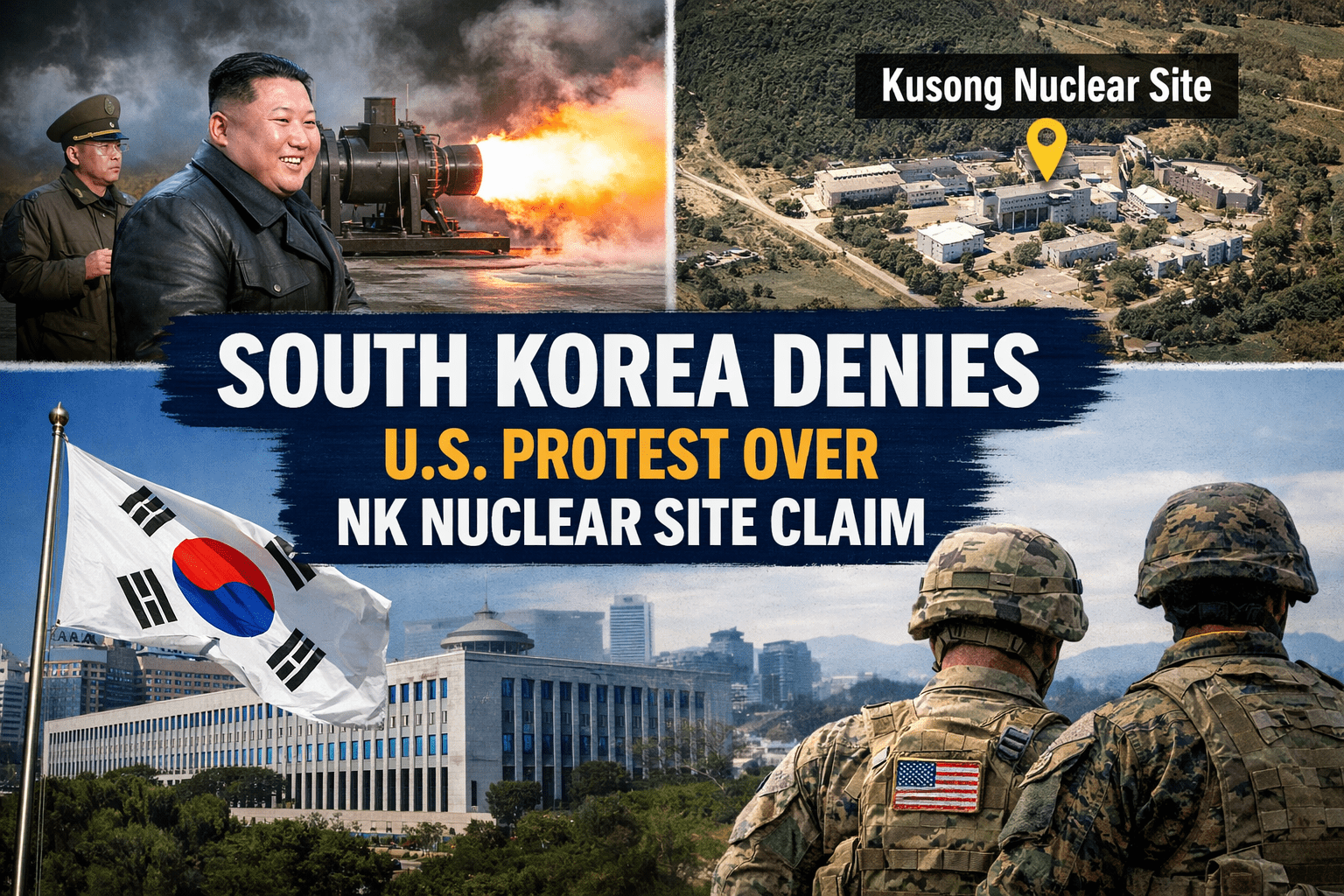
South Korea has dismissed reports suggesting that the United States protested against remarks made by its unification minister regarding a previously unconfirmed North Korean nuclear site.
Officials in Seoul stated they were not aware of any protest or restrictions on intelligence sharing, pushing back against claims that Washington was unhappy with the disclosure.
Controversy Over Nuclear Site Disclosure
The issue stems from comments made by Unification Minister Chung Dong-young, who said during a parliamentary hearing that North Korea operates a uranium enrichment facility in Kusong, in addition to known sites at Yongbyon and Kangson.
However, reports suggested that the US was displeased with the statement, as the Kusong site had not been publicly confirmed in official international assessments.
A South Korean ministry spokesperson clarified that Chung’s remarks were based on publicly available data and international research, and that this explanation had been shared with US officials.
US Intelligence Concerns Denied
According to media reports, Washington had considered limiting intelligence-sharing with Seoul due to frustration over the disclosure and broader disagreements between the two allies.
But South Korea firmly rejected these claims, stating:
- No official protest had been communicated
- No changes in intelligence-sharing had been confirmed
- Any speculation linking the issue to bilateral tensions was unfounded
The US embassy in Seoul has not issued a formal response on the matter.
What the IAEA Actually Said
The controversy also highlights discrepancies in international reporting. Chung cited comments from International Atomic Energy Agency chief Rafael Grossi.
However, official transcripts from the agency only mentioned nuclear facilities at Yongbyon and Kangson, with no reference to Kusong.
This gap has raised questions about the accuracy of the minister’s statement and whether it may have unintentionally revealed sensitive or speculative intelligence.
Broader Implications for US–South Korea Ties
Despite the controversy, both countries appear keen to avoid escalation. The alliance between the United States and South Korea remains a cornerstone of regional security, particularly in countering North Korea’s nuclear ambitions.
Any disruption in intelligence-sharing could have serious consequences for monitoring Pyongyang’s weapons programs, making it crucial for both sides to maintain trust and coordination.
Conclusion
While reports of US dissatisfaction have sparked debate, South Korea has firmly denied any fallout from the remarks about North Korea’s alleged Kusong nuclear site. The episode underscores the حساس nature of intelligence disclosures and the delicate balance allies must maintain when dealing with nuclear threats.
As tensions on the Korean Peninsula persist, transparency, coordination, and careful communication will remain essential to preserving stability in the region.