




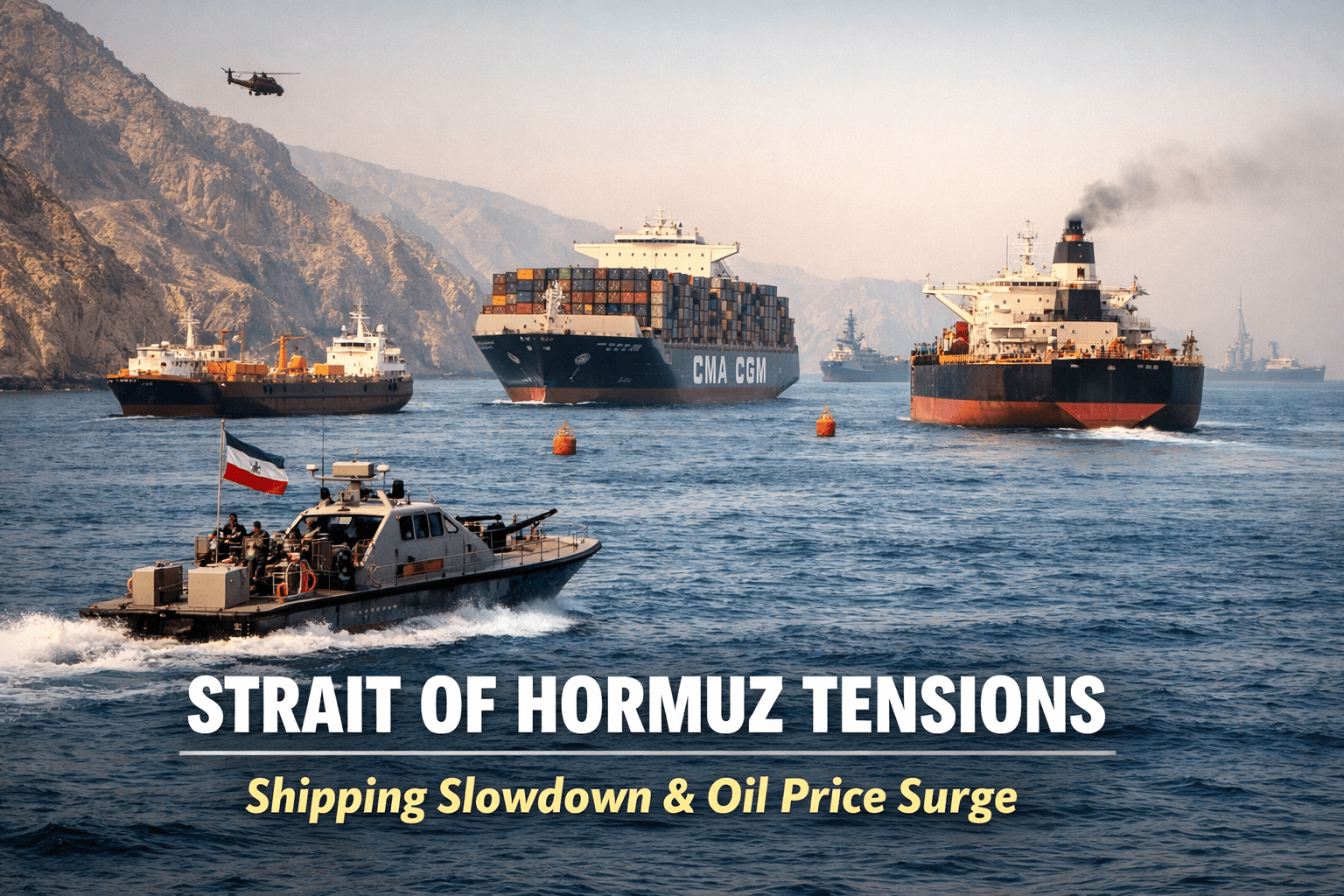
Shipping activity through the Strait of Hormuz has slowed dramatically following a sharp escalation in tensions between the United States and Iran, raising fresh concerns about global trade flows and energy security. The vital waterway, which typically handles around 130 vessels a day, is now seeing only a fraction of that traffic as shipowners and operators grow increasingly cautious.
Shipping Traffic Drops Sharply
According to ship-tracking data, just three vessels passed through the strait over a 12-hour period, highlighting the severity of the disruption. This sudden slowdown follows a series of confrontations over the weekend, including reports that Iran fired warning shots at commercial ships navigating the area. At the same time, U.S. forces seized an Iranian cargo vessel, further intensifying the standoff between the two countries.
Despite a brief reopening of the strait on Friday that allowed more than a dozen tankers to pass, the situation quickly deteriorated again. The fragile ceasefire between Washington and Tehran now appears to be under serious threat, with Iran vowing retaliation and refusing to engage in new diplomatic talks. This uncertainty has prompted shipping companies to delay or reroute voyages, avoiding the high-risk corridor altogether.
Limited Vessel Movement Continues
Among the few vessels still moving through the strait were a sanctioned oil tanker exiting the Gulf and two ships entering, including a chemical tanker and a liquefied petroleum gas carrier. However, such limited movement is far from normal and underscores the growing reluctance of the shipping industry to operate in the region under current conditions.
Insurance Costs Surge Amid Risks
The escalating tensions have also led to a sharp increase in war risk insurance premiums. Rates have risen to around 3% of a vessel’s value, up from approximately 2% just days earlier, according to shipping and insurance sources. This increase reflects the heightened perception of danger in the region, where even warning shots can have serious implications for commercial shipping.
Industry experts warn that repeated disruptions and failed attempts at de-escalation are making it increasingly difficult for companies to plan operations. Many shipowners are now factoring in not only higher costs but also the potential for sudden route closures or security incidents.
Oil Prices React to Supply Concerns
Global oil markets have responded quickly to the renewed instability. Brent crude prices climbed close to $95 per barrel, while U.S. West Texas Intermediate rose to nearly $88. The surge reflects fears that continued disruption in the Strait of Hormuz—one of the world’s most critical oil transit routes—could significantly impact supply.
In an effort to stabilize markets, the United States has temporarily renewed a sanctions waiver allowing limited trade in Russian oil. However, the move has done little to ease broader concerns about supply disruptions and geopolitical uncertainty.
Uncertain Outlook Ahead
The situation remains highly volatile, with the risk of further escalation looming large. Iran’s refusal to re-enter negotiations and its threats of retaliation suggest that tensions may persist in the near term. Meanwhile, countries dependent on Gulf energy supplies are closely monitoring developments and adjusting policies to secure imports.
As one of the world’s most strategic chokepoints, the Strait of Hormuz plays a critical role in global trade. Any prolonged disruption could have far-reaching consequences, not only for energy markets but also for international shipping and economic stability.