



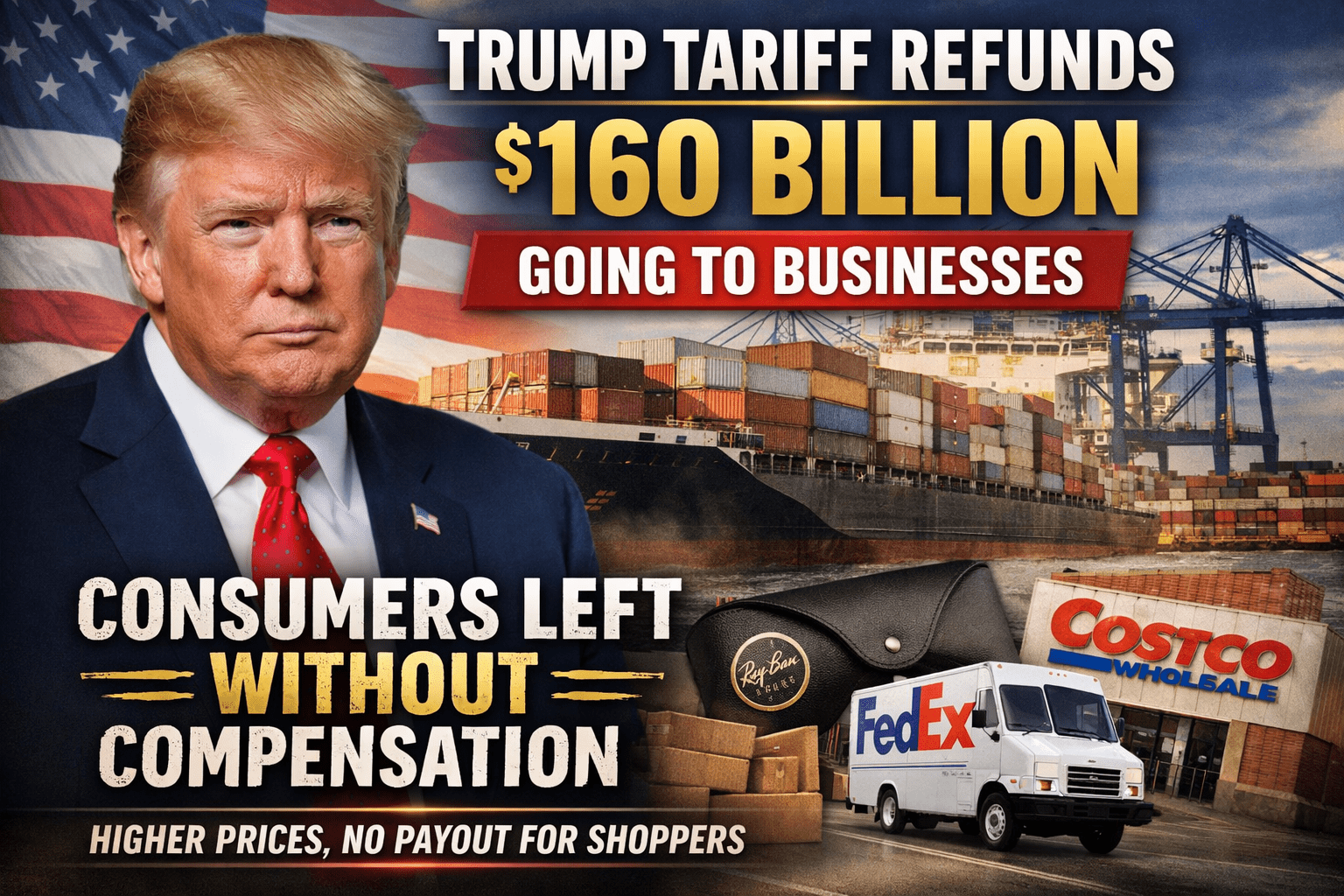
The United States government has begun issuing refunds for billions of dollars in tariffs previously imposed under former President Donald Trump, following a landmark ruling by the US Supreme Court earlier this year. While the move marks one of the largest repayment programs in US history, concerns are growing that everyday consumers—who ultimately bore the cost of these tariffs—may see little to no benefit.
Massive Refund Programme Rolled Out for Importers
The refunds stem from duties collected under the International Emergency Economic Powers Act (IEEPA), which were invalidated by the courts in February. In March, the US Court of International Trade ordered the government to return more than $160 billion collected from importers. This decision opened the door for approximately 330,000 businesses to reclaim funds paid over the course of the tariff regime.
To streamline the process, US Customs and Border Protection launched an online system called the Consolidated Administration and Processing of Entries (CAPE). The portal allows importers to file claims and receive refunds as lump-sum payments rather than navigating complex, item-by-item submissions. Officials say the system is designed to ensure efficiency, with approved refunds expected to be processed within 60 to 90 days, including applicable interest.
Early data suggests strong participation. As of early April, over 56,000 importers had already filed claims totaling roughly $127 billion. For many companies, these refunds represent significant financial relief after years of absorbing or passing on tariff costs.
Consumers Left Out of Direct Compensation
However, the benefits appear largely confined to businesses. Individual consumers—who often faced higher prices as companies adjusted to increased import costs—are not directly eligible for compensation under the current framework. This has sparked widespread criticism and legal challenges.
Many economists argue that tariffs, though technically paid by importers, are frequently passed down the supply chain, ultimately affecting consumers through higher retail prices. From everyday goods like clothing and electronics to specialized materials used in manufacturing, the ripple effects of these tariffs were felt across the economy.
Despite this, federal officials have made it clear that the refund program is not intended to reimburse consumers. US Trade Representative Jamieson Greer has encouraged companies receiving refunds to use the funds to support employees, such as through bonuses, rather than attempting to retroactively compensate customers. Similarly, Treasury Secretary Scott Bessent has expressed skepticism that consumers will see any direct financial return.
Legal Battles and Pressure on Corporations
This stance has led to a wave of class-action lawsuits. Consumers have begun filing cases against major corporations, arguing that any refunded tariff costs should be passed back to customers who originally bore the burden through higher prices.
High-profile cases have emerged against companies such as EssilorLuxottica, the maker of Ray-Ban sunglasses, logistics giant FedEx, and retail giant Costco. These lawsuits claim that businesses unjustly profited by passing on tariff costs and should now return those gains.
Costco, however, has taken a different approach. Chief executive Ron Vachris has indicated that the company plans to pass on any tariff refunds indirectly by lowering prices and improving value for customers, rather than issuing direct payments.
Businesses Face Complex Cost Structures
The issue is further complicated by the fact that many businesses did not fully pass on tariff costs to consumers in the first place. In some cases, companies absorbed a portion of the financial burden to remain competitive, while also dealing with additional costs such as supply chain disruptions, increased borrowing, and lost sales.
For small business owners like lamp-maker Sue Johnson, the situation remains frustrating. She reported that her supplier doubled the cost of a key material due to tariffs, significantly impacting her business. Despite this, she does not expect to benefit from the refund process, highlighting the uneven distribution of relief.
Uncertain Benefits for the Public
As the refund process unfolds, the central question remains whether any of the returned funds will trickle down to ordinary consumers. While some companies may choose to reduce prices or offer better deals, there is no requirement for them to do so.
For now, the consensus among policymakers and analysts appears clear: while businesses stand to recover billions, the average consumer is unlikely to see a direct financial benefit. The tariff refunds may correct a legal and economic imbalance—but for millions of Americans, the higher prices they paid may simply remain a sunk cost.