






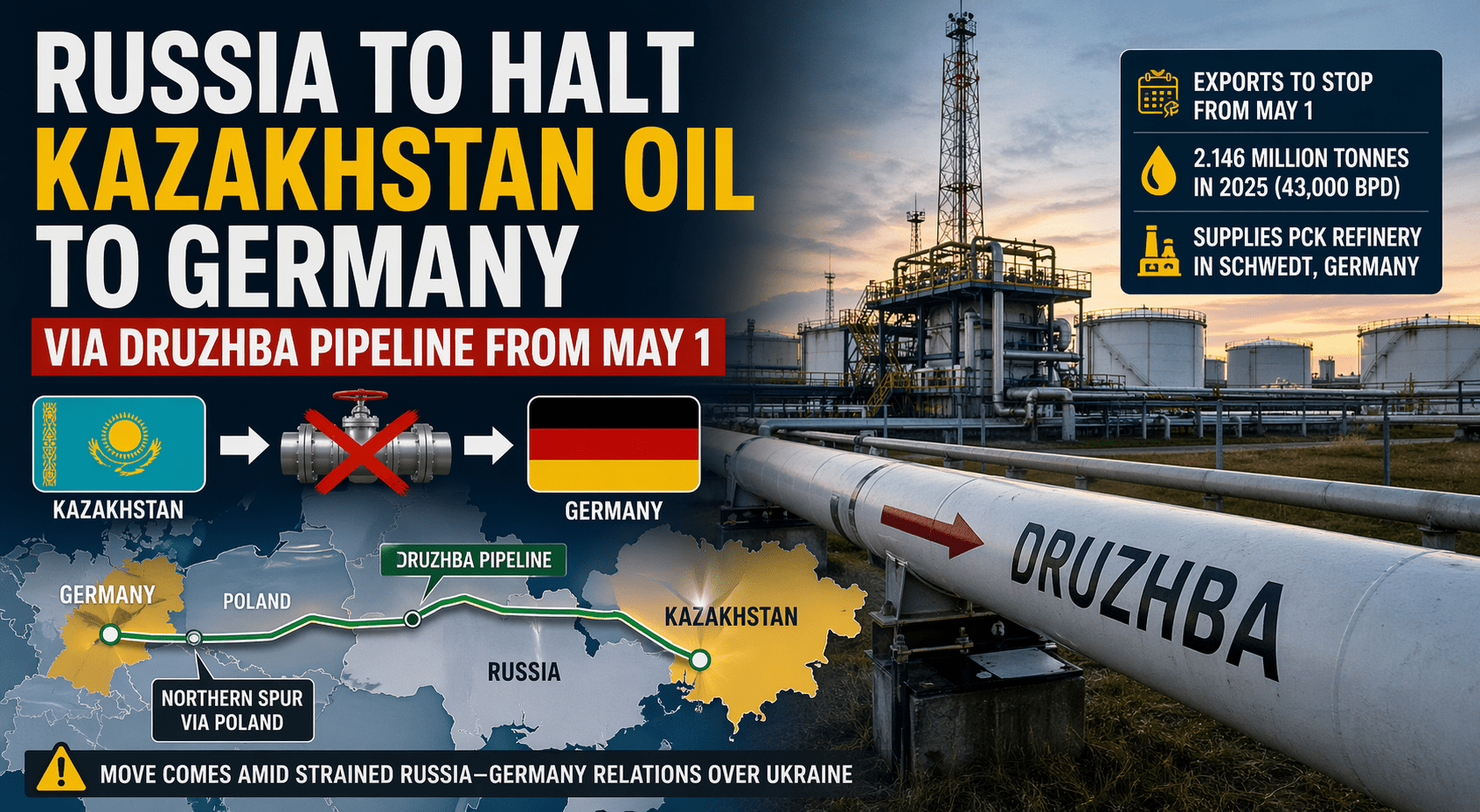
Russia is preparing to suspend oil exports from Kazakhstan to Germany through the Druzhba pipeline starting May 1, according to multiple industry sources familiar with the matter. The move, if confirmed, could further strain Europe’s already fragile energy landscape amid ongoing geopolitical tensions.
Sudden Halt in Oil Flow
Sources told Reuters that updated export schedules have already been communicated to both Kazakhstan and Germany, indicating a complete halt in shipments via the Druzhba pipeline. The pipeline, one of the world’s largest oil transportation networks, has long served as a critical route for supplying crude oil from Russia and Central Asia into Europe.
The Kremlin, however, has not officially confirmed the development. Spokesman Dmitry Peskov stated that the government needs to verify the information, signaling uncertainty or internal review within Russian authorities.
Rising Political Tensions Behind the Move
The reported decision comes at a time of continued friction between Russia and Germany over the Ukraine conflict. Berlin has been a strong supporter of Kyiv, both politically and militarily, leading to a breakdown in traditional energy ties between the two nations.
In 2022, Germany took control of local subsidiaries of Russian oil giant Rosneft, effectively ending decades of direct reliance on Russian crude. Since then, Germany has increasingly turned to alternative sources, including Kazakhstan, to meet its energy needs.
Impact on Germany’s Energy Supply
Kazakhstan has emerged as a key supplier for Germany, particularly through the northern branch of the Druzhba pipeline that runs via Poland. In 2025 alone, Kazakhstan exported approximately 2.146 million metric tons of oil to Germany through this route — equivalent to around 43,000 barrels per day, marking a 44% increase from the previous year.
A major beneficiary of these supplies is the PCK refinery in Schwedt, one of Germany’s largest oil processing facilities. The refinery has relied partly on Kazakh crude since Russian oil deliveries were halted following the outbreak of the Ukraine war.
Vulnerabilities and Disruptions
Even before this potential halt, oil flows through the Druzhba pipeline have faced disruptions. Ukrainian drone attacks on pipeline infrastructure within Russia have intermittently affected supply stability, highlighting the vulnerability of energy routes in conflict zones.
If the suspension proceeds as reported, Germany may face renewed pressure to secure alternative energy sources or increase imports via sea routes, which are often more expensive and logistically complex.
What Happens Next?
With no official confirmation yet from Moscow, the situation remains fluid. However, energy markets and European policymakers are closely monitoring developments, as any prolonged disruption could have ripple effects on fuel prices, supply chains, and broader economic stability in the region.
The coming days will be crucial in determining whether this reported halt becomes a confirmed policy shift—or another flashpoint in the evolving energy geopolitics of Europe.