
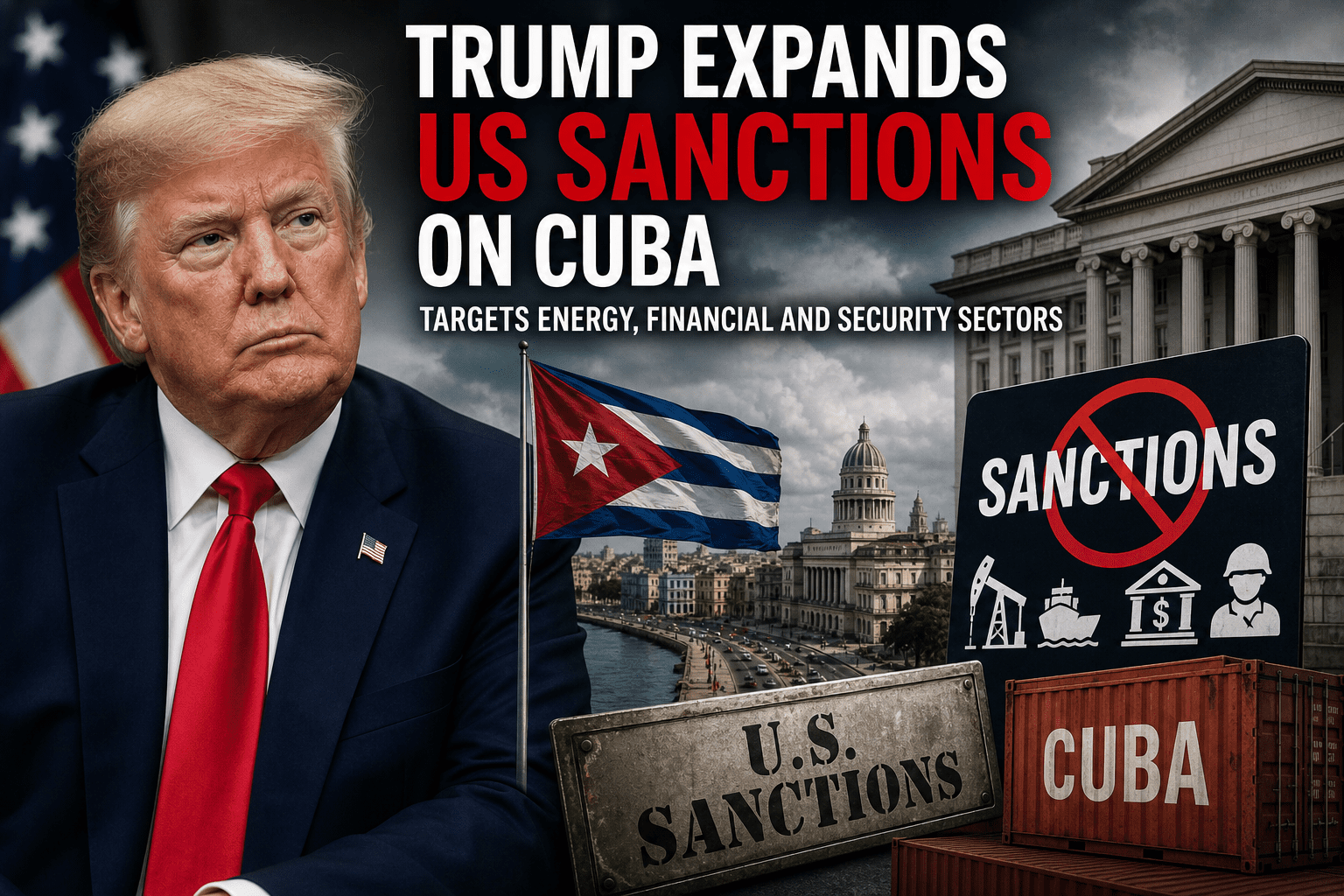
The United States has significantly escalated pressure on Cuba after Donald Trump signed a new executive order expanding sanctions against the Cuban government and its affiliates.
The move targets key sectors of Cuba’s economy and is being viewed as one of the most aggressive steps taken by Washington against Havana in recent years.
What the New Sanctions Target
The latest sanctions broaden the scope of restrictions to include:
- Cuba’s security and intelligence apparatus
- Energy, oil, and mining sectors
- Financial services and banking networks
- Individuals and entities linked to corruption or human rights violations
The order also introduces secondary sanctions, meaning even foreign companies doing business with targeted Cuban entities could face penalties.
Wider Impact on Global Businesses
The sanctions could have far-reaching global consequences. According to analysts, companies that previously maintained separation between their US and Cuban operations may no longer be protected.
Industries likely to be affected include:
- Oil and gas companies
- Mining firms
- International banks
- Logistics and trade operators
This marks a shift toward stricter enforcement that extends beyond US borders.
US Justification: Security and Geopolitical Concerns
US officials have defended the move by citing Cuba’s alleged ties to countries and groups considered hostile to American interests.
Washington claims that Cuba provides an operational environment for foreign intelligence and militant activities close to US territory, increasing national security concerns.
Cuba’s Strong Response
Cuba has strongly condemned the new measures. President Miguel Díaz-Canel described the sanctions as “coercive” and accused the US of intensifying its long-standing economic blockade.
Foreign Minister Bruno Rodríguez Parrilla stated that the sanctions amount to “collective punishment” of the Cuban people and vowed that the country would not be intimidated.
Escalating Tensions Between US and Cuba
The latest sanctions come amid a broader tightening of US policy toward Cuba:
- Restrictions on oil shipments to Cuba have already created fuel shortages
- The country has faced nationwide blackouts due to energy constraints
- Several international airlines have reduced or suspended flights
These developments indicate mounting economic pressure on the island nation.
Link to Regional Strategy
The move is also seen as part of a wider US strategy in the region. Following actions in Venezuela, the US appears to be increasing pressure on governments it considers adversarial.
Trump has previously hinted at further action against Cuba, signaling that Washington may continue to escalate its stance.
Economic and Human Impact
The expanded sanctions could have significant consequences:
- Reduced foreign investment
- Increased economic isolation
- Higher cost of living for Cuban citizens
- Strain on essential services and infrastructure
Critics argue that such measures often impact ordinary citizens more than government officials.
Conclusion
The expansion of US sanctions on Cuba marks a major escalation in bilateral tensions, with potential global economic ripple effects. As Washington tightens restrictions and Havana pushes back, the situation is likely to remain a key flashpoint in international relations.