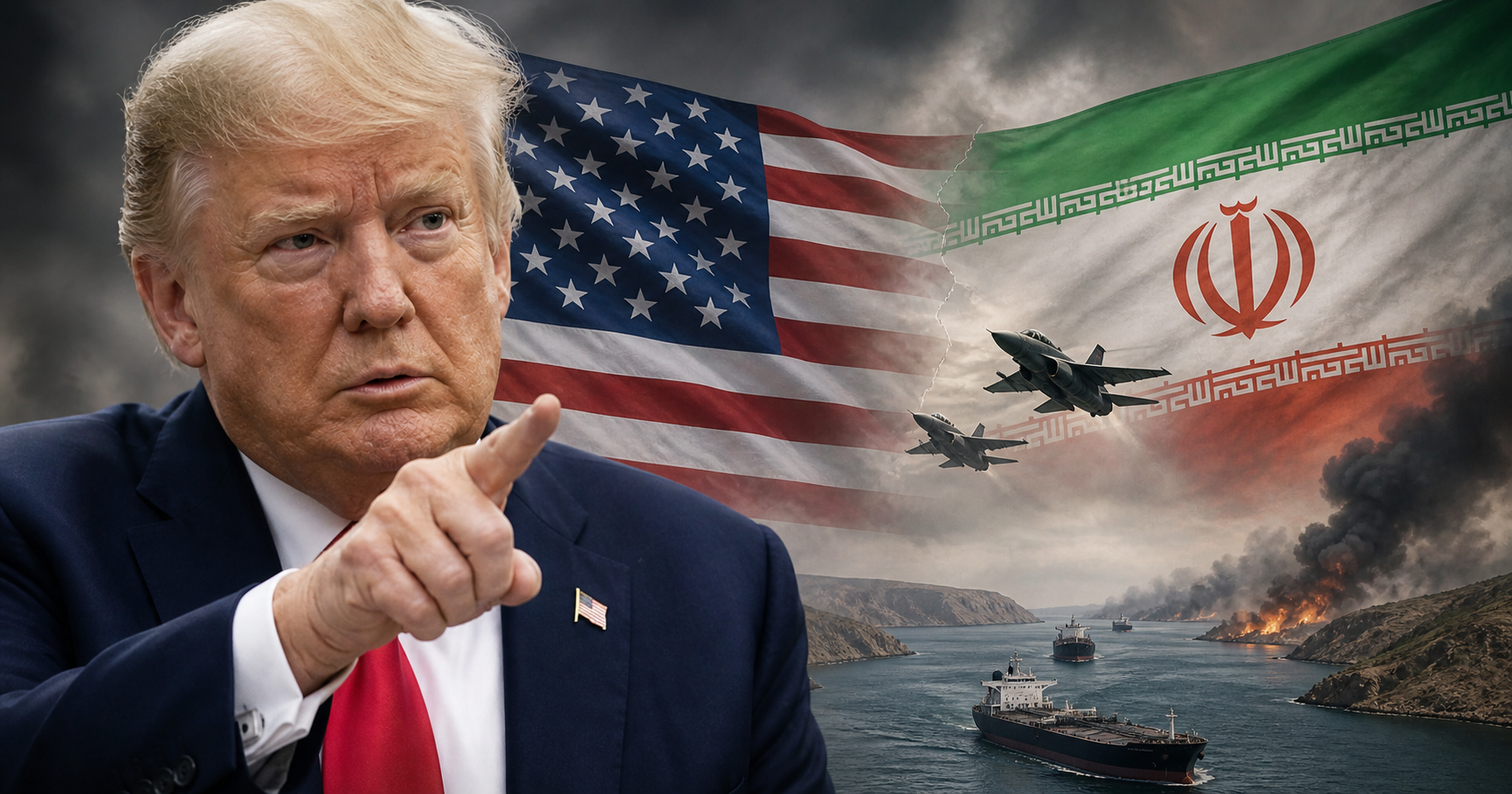

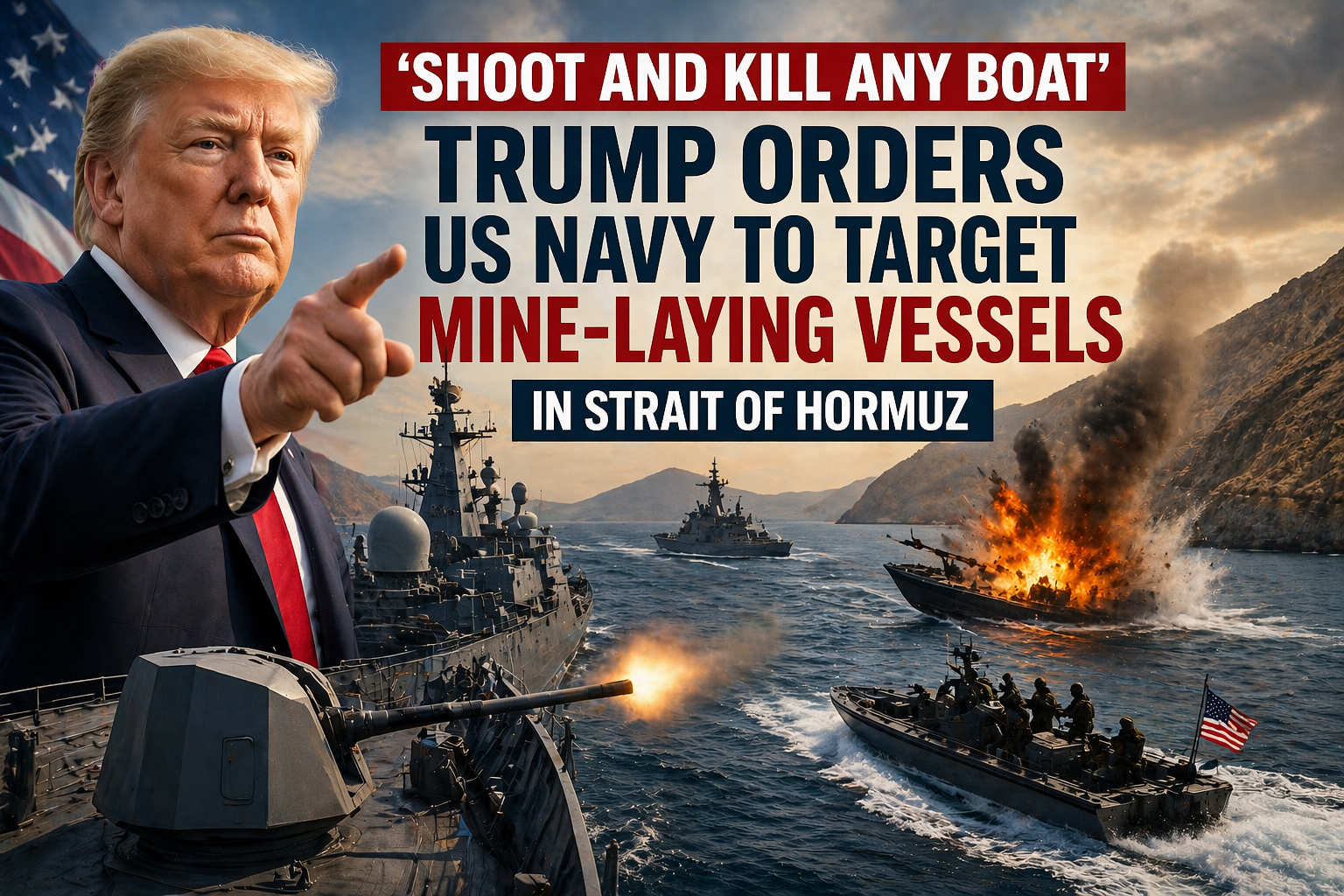
In a dramatic escalation of maritime tensions, Donald Trump has ordered the United States Navy to open fire on any vessel suspected of laying mines in the Strait of Hormuz. The directive marks one of the most aggressive military postures taken by the United States in the ongoing conflict with Iran, raising fears of further escalation in an already volatile region.
No Hesitation: Trump’s Direct Order
In a strongly worded statement posted on Truth Social, Trump made his position clear, stating that there should be “no hesitation” in targeting vessels involved in mine-laying operations. He emphasized that even small boats would be treated as legitimate threats if found deploying naval mines in the waterway. The President also claimed that Iran’s naval capabilities had already been significantly weakened during the conflict. Alongside the directive, Trump confirmed that U.S. mine-clearing operations are already underway and will now be intensified, with mine-sweeping efforts set to be tripled, naval patrols expanded across the region, and immediate response authority granted to US forces.
Strategic Importance of the Strait
The Strait of Hormuz remains one of the most critical maritime chokepoints in the world, handling nearly 20% of global oil shipments. Any disruption in this narrow passage has immediate global consequences, including delays in oil supply chains, rising shipping costs and insurance premiums, and heightened volatility in energy markets. The recent increase in naval activity, including mine threats and vessel interceptions, has already slowed traffic through the strait to near standstill levels.
Timing: Talks vs Escalation
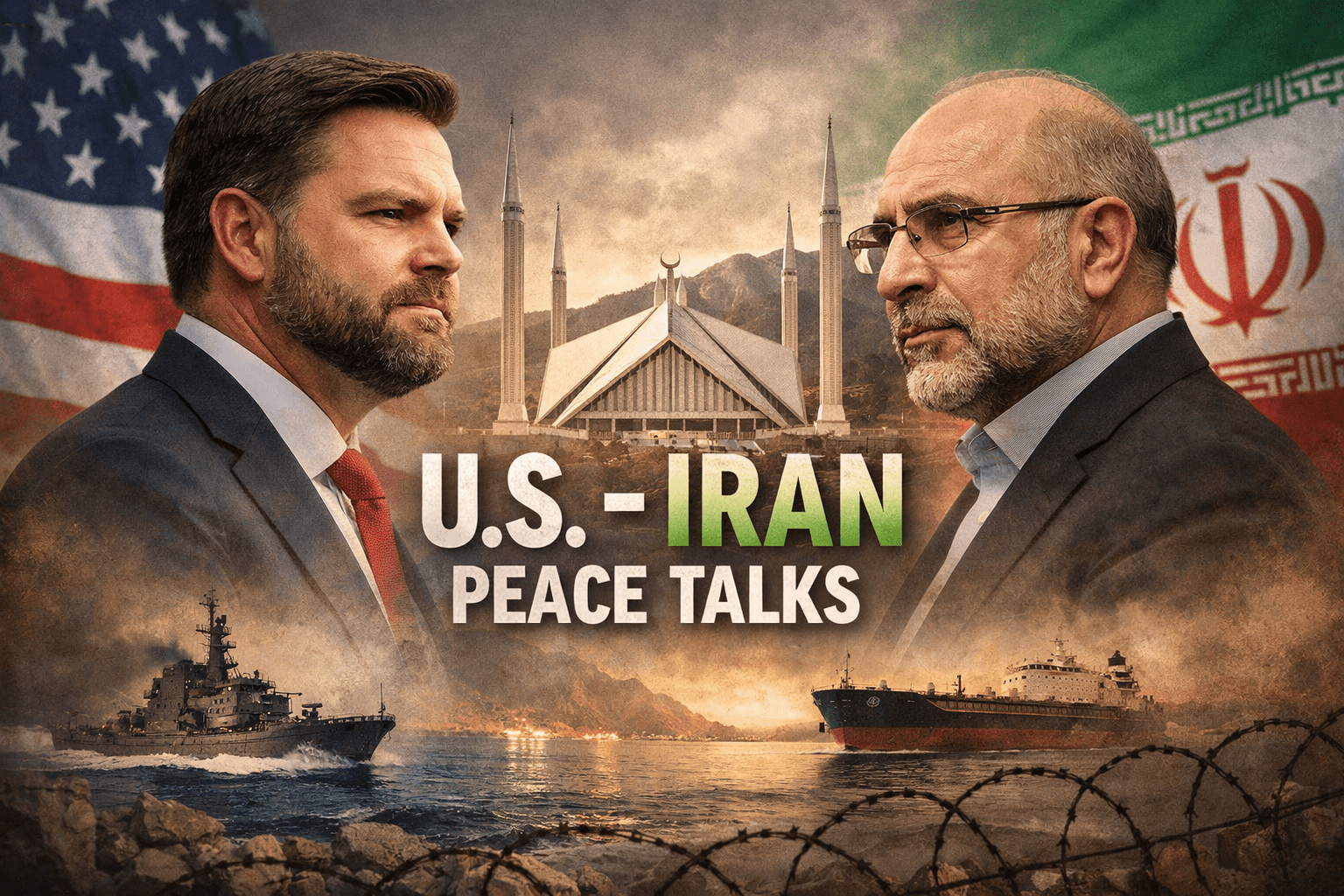
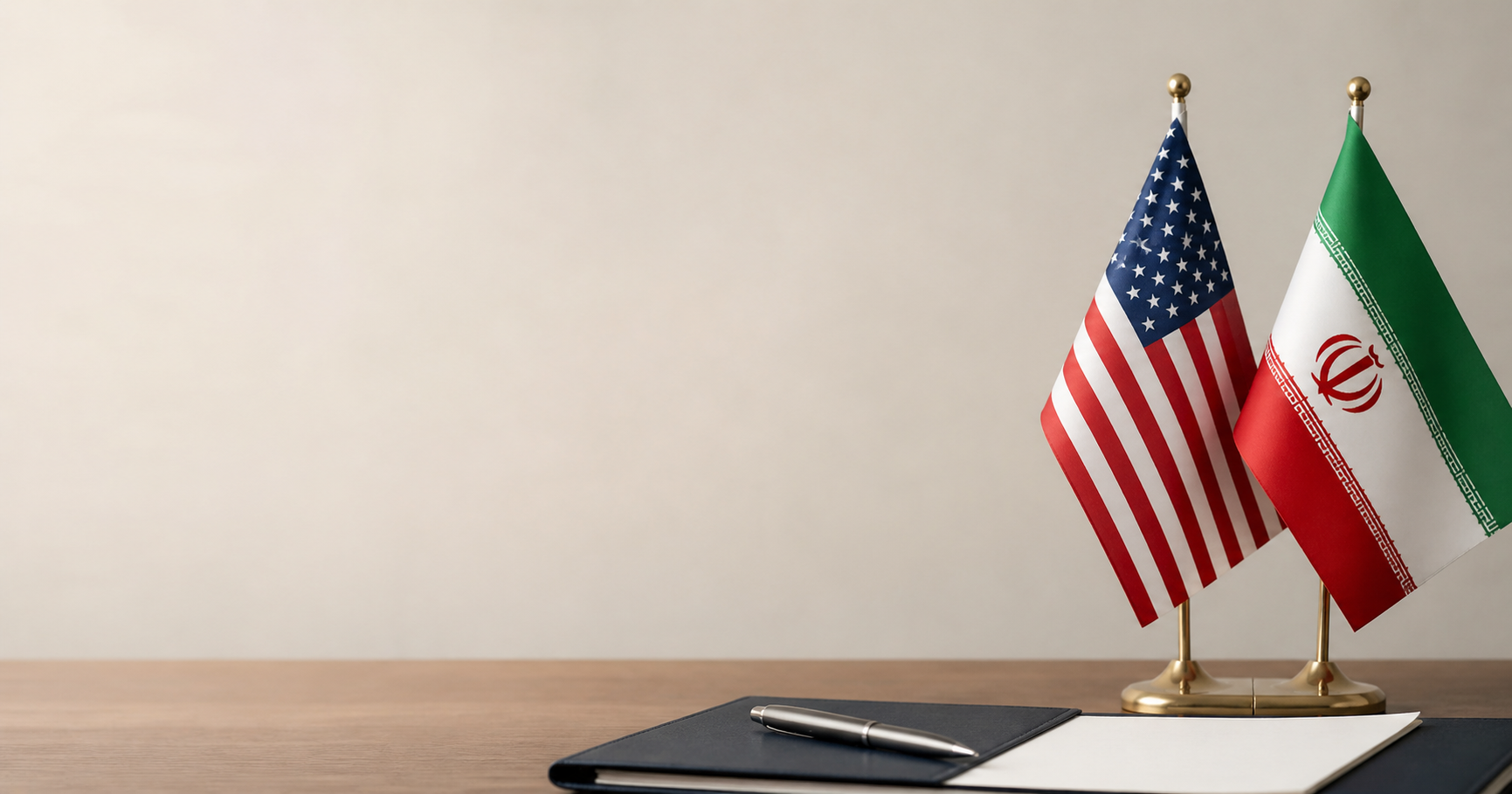
Trump’s directive comes at a sensitive moment, as diplomatic efforts are underway to revive negotiations between the United States and Iran. Mediation attempts led by Pakistan aim to bring both sides back to the negotiating table after earlier talks in Islamabad failed to produce a breakthrough. The initial round of discussions involved high-level representatives, including US Vice President JD Vance, Special Envoy Steve Witkoff, and Iranian officials including Mohammad Baqer Qalibaf and Foreign Minister Abbas Araghchi. Despite these efforts, key disagreements—particularly over the US naval blockade—continue to stall progress.
Blockade Remains Core Dispute
While Trump recently agreed to extend the ceasefire, he has maintained a firm stance on continuing the naval blockade against Iran. Tehran, however, insists that lifting the blockade is a precondition for any lasting peace agreement. This has created a tense situation where a ceasefire exists on paper, but military and economic pressure continues to rise on the ground.
Rising Risk of Wider Conflict
Military analysts warn that the order to directly engage mine-laying vessels significantly raises the risk of unintended escalation. Misidentification of vessels, rapid retaliation, or accidental encounters in the crowded waterway could trigger a broader conflict. Commercial shipping has already become increasingly risky, with operators facing uncertainty and higher costs.
Conclusion
Trump’s latest directive underscores the fragile balance between diplomacy and military action in the Middle East. While negotiations continue behind closed doors, the expansion of naval operations signals that tensions remain far from resolved. With the Strait of Hormuz at the center of the crisis, the world watches closely, aware that even a small miscalculation could have global consequences.