




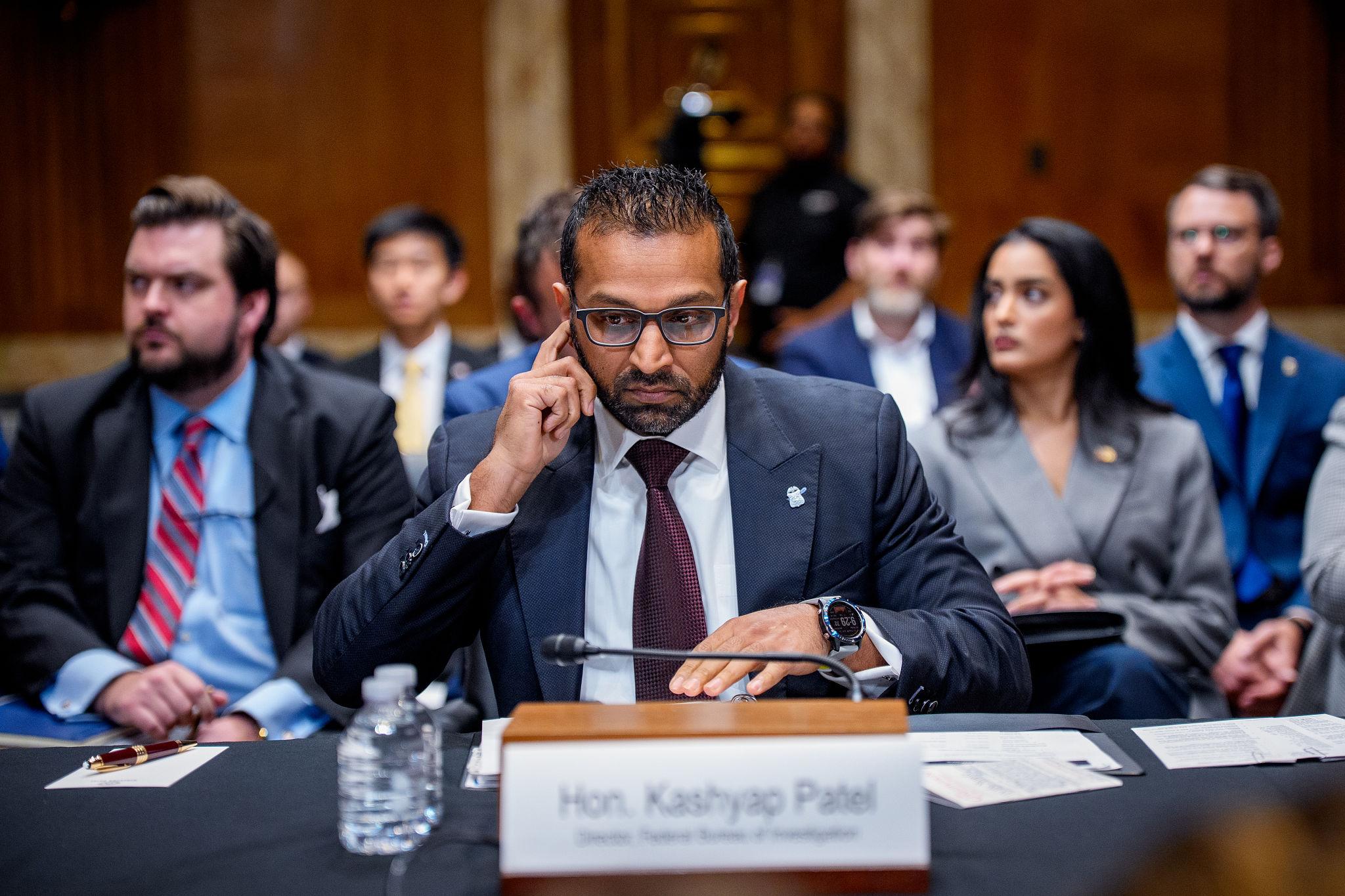
A major legal dispute has emerged between FBI Director Kash Patel and The Atlantic following the publication of a controversial report alleging misconduct, including excessive drinking and erratic behaviour. Patel has strongly denied all accusations, calling them “completely false” and defamatory, while signaling that the matter could soon be decided in court.
The controversy began after a report authored by journalist Sarah Fitzpatrick cited multiple unnamed sources who claimed that Patel engaged in troubling behaviour during his tenure. According to the report, these allegations included excessive alcohol consumption, unexplained absences during key moments, and instances where Patel was allegedly difficult to reach during sensitive operational periods.
Pre-Publication Legal Warning
Before the article was published, Patel’s legal team, led by attorney Jesse Binnall, issued a formal legal notice to the magazine. The letter, dated April 17, 2026, warned that the report contained numerous false and defamatory claims.
According to the legal notice:
- The draft article included at least 19 separate allegations
- Most were described as unsourced, inaccurate, and defamatory
- The publication was explicitly warned against proceeding
Binnall later stated publicly that the outlet chose to publish the report despite being fully aware of these objections. “They were on notice… They published anyway. See you in court,” he wrote, indicating that legal proceedings are imminent.
Details of the Allegations
The report claims that Patel’s alleged behaviour raised concerns within national security circles. Among the more serious accusations were claims that he was “known to drink to the point of obvious intoxication” and that his conduct occasionally affected his professional availability.
It also referenced specific locations, including private venues in Washington and Las Vegas, where Patel was allegedly seen consuming alcohol in the presence of government or administration officials.
Additionally, the report suggested that his alleged behaviour created unease within the Federal Bureau of Investigation and the Department of Justice, potentially impacting leadership confidence at a critical time for national security operations.
However, it is important to note that these claims were attributed largely to anonymous sources described as “people familiar with the matter,” a point that has become central to the dispute.
Strong Denial From Patel’s Team
Patel and his legal representatives have categorically rejected all allegations. In their response, they stated that:
- The claims of excessive drinking are entirely fabricated
- There was no disruption to FBI operations or counterterrorism work
- The report relies on unverified and unreliable anonymous sources
Officials from the FBI’s Office of Public Affairs also reportedly dismissed the claims as “completely false at a nearly 100 per cent clip,” further strengthening Patel’s position.
Binnall criticized the publication’s journalistic standards, arguing that reliance on unnamed sources without concrete evidence fails to meet acceptable reporting norms, particularly when making serious accusations against a high-ranking public official.
Legal and Media Implications
The case is shaping up to be a significant confrontation between a senior government official and a major media outlet. If Patel follows through with his legal threat, the lawsuit could test the boundaries of defamation law in the United States, especially in cases involving anonymous sourcing.
For media organizations, the case raises questions about:
- The credibility and use of confidential sources
- Editorial responsibility when reporting sensitive allegations
- The balance between public interest and reputational harm
For public officials, it highlights the challenges of responding to damaging reports in an era of rapid information dissemination.
What Comes Next?
As tensions escalate, all eyes are now on whether formal legal proceedings will be initiated. The outcome could have far-reaching implications not only for Patel and The Atlantic, but also for broader standards in investigative journalism and accountability.
For now, the situation remains a high-stakes standoff between denial and allegation — one that could soon move from headlines to the courtroom.