



Less than a month after assuming power with a strong mandate, Nepal’s newly formed government led by Balen Shah is already facing widespread protests across the country. Rising public anger over controversial policies, student unrest, and corruption allegations has triggered demonstrations from Kathmandu to other major cities.
Nationwide Protests Erupt
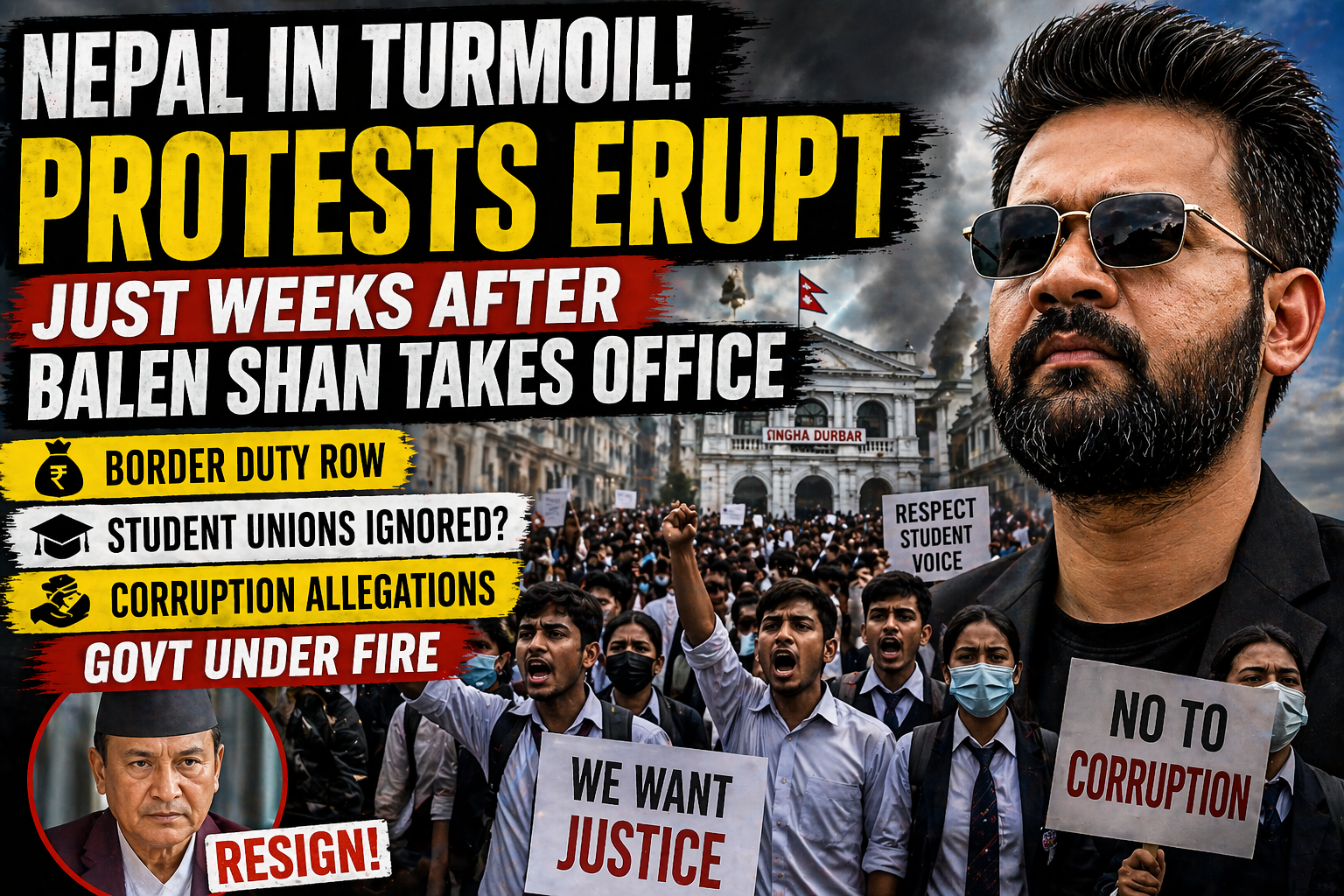
Protests have rapidly spread across Nepal, with large gatherings reported in the capital Kathmandu and near Singha Durbar, the country’s administrative hub. Demonstrations have also taken place in multiple cities, indicating growing dissatisfaction among citizens.
Students, political activists, and ordinary residents have joined the protests, highlighting the scale and diversity of the unrest.
Border Duty Decision Sparks Anger
One of the primary triggers behind the protests is the government’s decision to impose a mandatory customs duty on goods worth over ₹100 brought into Nepal from India.
For residents living in border areas, this move has had an immediate impact. Many communities rely heavily on cross-border trade for daily essentials, and the new policy is being seen as an added financial burden.
Protesters argue that the decision fails to consider the economic realities of border populations and disproportionately affects lower-income households.
Student Unions Row Intensifies Crisis
The situation has been further aggravated by tensions between the government and student unions. Authorities have been accused of sidelining or rejecting unions affiliated with political parties.
Student leaders claim the government has adopted a rigid and repressive approach instead of engaging in constructive dialogue. As a result, thousands of students from schools and colleges have taken to the streets.
Images from protests show students in uniforms holding placards and chanting slogans, reflecting the growing involvement of youth in the movement.
Corruption Allegations Add Fuel
Adding to the crisis are serious allegations against Home Minister Sudan Gurung. Protesters and opposition groups have accused him of possessing disproportionate assets and being linked to questionable financial transactions.
Reports suggest that documents point to investments and shareholdings connected to controversial entities, intensifying demands for his resignation.
Civil society groups and political parties have made Gurung’s removal a central demand, further escalating tensions.
Growing Pressure on the Government
The convergence of multiple issues — economic decisions, student unrest, and corruption allegations — has created a challenging situation for the newly formed government.
Despite coming to power with a two-thirds majority, the administration is now under pressure to respond quickly and effectively to public concerns.
What Lies Ahead
The coming weeks will be crucial for Balen Shah’s government. Whether it chooses to revise policies, engage in dialogue with protestors, or take action against allegations within its ranks will determine its political stability.
For now, the early days of the government are being marked not by consolidation of power, but by growing unrest and calls for accountability.